When Myths Whisper: My Journey Through the Mythological Heart of JRPGs
Discover how JRPGs masterfully weave ancient mythology into immersive digital worlds, creating profound narratives that resonate deeply. Explore the legendary echoes in Ys VI and the philosophical duality of Breath of Fire IV.
I often find myself wandering through digital worlds that feel strangely familiar, as if I’ve walked these paths in half-remembered dreams. It’s not just the thrill of adventure or the clash of steel that calls to me; it’s the deep, resonant hum of ancient stories echoing through the code. As a player in 2026, I’ve come to see that the best JRPGs don't just borrow from mythology—they converse with it. They take the old bones of gods and heroes and breathe new, pixelated life into them, creating universes that feel both fantastical and intimately known. These games are more than entertainment; they are modern-day campfires where we gather to hear the whispers of Gilgamesh, Odin, and the kami, all retold for a new age.
The Cradle of Civilization in Code: Ys VI: The Ark of Napishtim
My journey often begins in the most ancient of places. In Ys VI: The Ark of Napishtim, I didn't just control Adol Christin; I became an archaeologist of myth, brushing the digital dust off Mesopotamian legends. The game wears its inspiration not as a costume, but as its very skeleton. The titular Ark isn’t just a cool name—it’s a direct nod to Utnapishtim, the Noah-like figure from the Epic of Gilgamesh. Sailing through that world, the quest for immortality and the clash between ancient powers didn’t feel like a simple plot device. It felt… weighty, you know? Like the game was reminding me that these stories about fearing the gods and seeking eternal life are some of humanity’s oldest anxieties.
The genius lies in the blend. The game doesn't stop at Babylon. It weaves in whispers of Rome, Carthage, and Canaan, creating a tapestry of historical conflict that mirrors our own world's tumultuous past. Characters like Ernst aren't just villains; they feel like tragic figures pulled from a lost epic, their motivations grand and doomed. Playing it, I realized this wasn’t a history lesson. It was mythology being used as a foundation to build something entirely new—a world that felt epic because its roots were planted in the deepest soil of human storytelling.
The Dance of Dualities: Breath of Fire IV
From the arid plains of Mesopotamia, my path turned eastward to the philosophical and spiritual landscapes of Breath of Fire IV. If Ys VI is about epic scale, this game is about intimate balance. Here, mythology isn’t just in the names of gods, but in the very air the characters breathe. The central concept of yin and yang isn’t a mere reference; it’s the engine of the entire narrative.
The duality between Ryu and Fou-Lu—two halves of a sundered deity—is one of the most profound uses of myth I’ve experienced. Their struggle isn’t just good versus evil; it’s a cosmic dance of opposing forces, a reflection of the eternal push-and-pull found in Chinese philosophy and myth. It makes you think about your own inner conflicts, honestly. The dragons here shed their Western, fire-breathing archetypes and instead move with the serpentine grace and elemental power of Eastern lore. The game grounds its high fantasy in these recognizable cultural symbols, making its world feel distinct, coherent, and spiritually resonant.
| Mythological Element | Game Manifestation | Emotional/Theme Impact |
|---|---|---|
| Yin-Yang Philosophy | The Ryu/Fou-Lu duality | Explores balance, conflict, and the self. |
| Reincarnation | The cycle of the Dragon God | Themes of destiny, legacy, and eternal return. |
| Eastern Dragons | Designs and powers of playable dragons | Creates a unique aesthetic and sense of awe. |
A Tapestry of Twilight Gods: Odin Sphere & Valkyrie Profile
The cold, fatalistic winds of Norse mythology have always been a perfect fit for the JRPG’s penchant for grand, world-ending drama. In Odin Sphere, the debt to the Eddas is as clear as a ring of broken swords. The game doesn’t just borrow the name Odin; it captures the tragic, operatic spirit of the myths. Its story, weaving together the fates of a cursed princess, a noble warrior, and a tragic sorceress, feels like a lost saga itself, barreling toward its own version of Ragnarök. The artifacts, the prophecies, the very atmosphere—it’s all steeped in that Norse sense of glorious doom. It’s stylish, sure, but its grandeur comes from wearing its mythological heart on its sleeve.
Then there’s Valkyrie Profile: Lenneth, which goes a step further by making you an active participant in the myth. You are the Valkyrie, the chooser of the slain. This isn’t a background detail; it’s the core gameplay loop. Gathering einherjar isn’t just party recruitment—it’s a profoundly emotional process. You witness the tragic, human stories of each warrior’s death before guiding their spirit to Valhalla. The game makes you feel the weight of your divine duty, and that existential dread—the questioning of fate and cosmic purpose—lifts the narrative from a simple fantasy to a poignant meditation on death and meaning. It’s one of those games that sticks with you, long after the credits roll.
A World in Prayer: Final Fantasy X
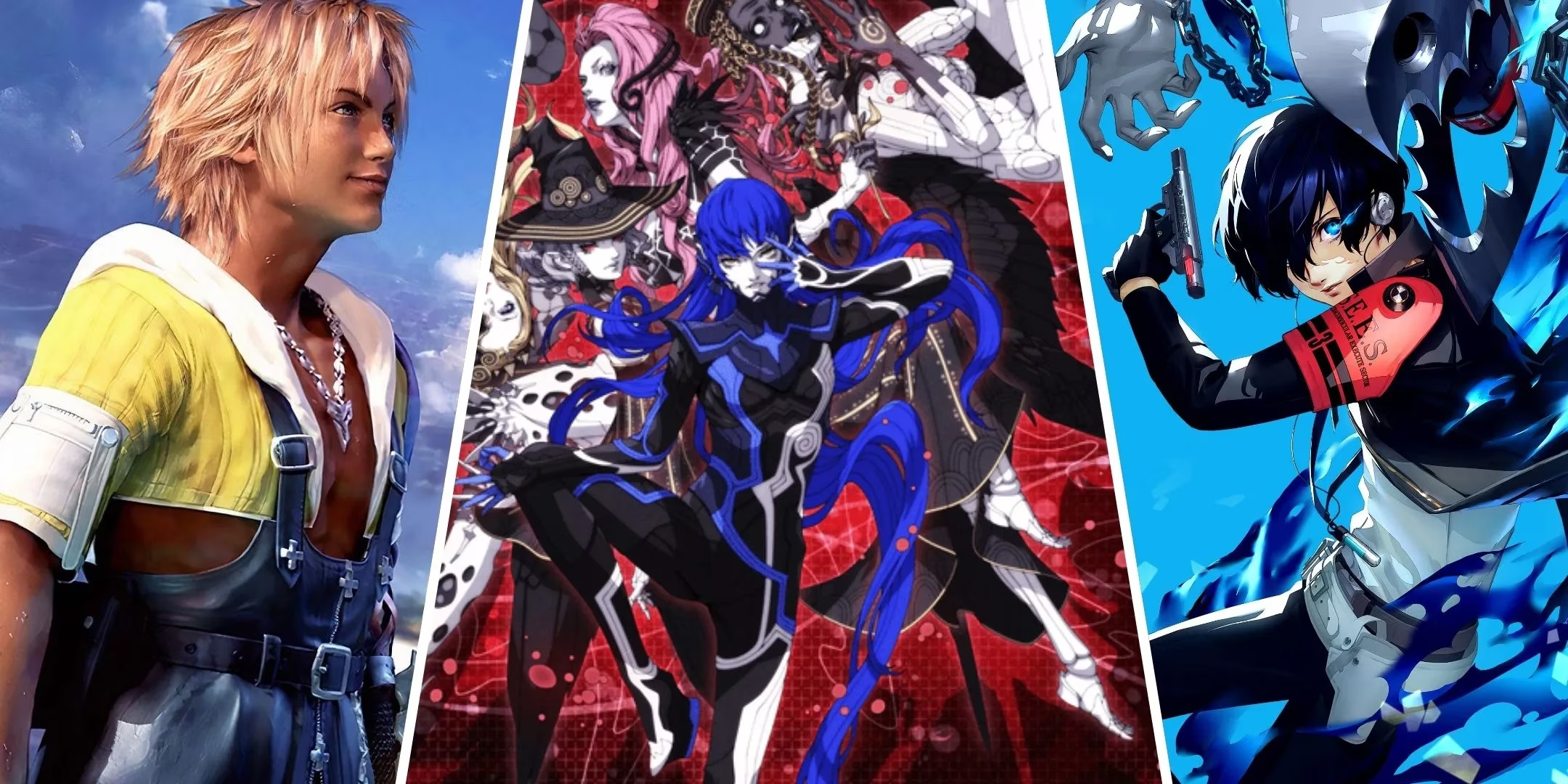
Some games create a world; others create a belief system. Final Fantasy X masterfully synthesizes Eastern and Western traditions into a spiritual ecosystem that feels lived-in. Spira isn’t just a place with temples; it’s a world defined by its faith. Yuna’s sending dance isn’t just a cool cutscene—it’s a direct reflection of Shinto rituals for placating spirits, grounding the game’s cycle of life and death in a real, recognizable practice.
The pilgrimage structure echoes Buddhist journeys toward enlightenment, while the summoned Aeons are a brilliant fusion of mythic archetypes. They’re not just monsters in a menu. Anima, with its chains and agony, pulls from deep wells of Gnostic and psychological symbolism, while Valefor winks at Western demonology. This blending creates a cohesive, unique theology for Spira. It showed me that the most powerful mythological inspirations aren’t about direct translation, but about using those ancient symbols as a language to express universal themes of sacrifice, faith, and breaking free from a cursed cycle.
Heroes, Personas, and Demons: The Personal Myth
The most compelling use of myth, for me, is when it turns inward. Persona 3 Reload uses Greek mythology not as set-dressing, but as a mirror for the soul. The game’s somber theme of confronting mortality—literally fighting your inner darkness each night—finds perfect symbolism in the Greek underworld and tales of tragic heroes. Each character’s Persona, drawn from these myths, isn’t random. It reflects their personal struggle, creating a parallel between their arc and a legendary one. It proves these ancient stories still hold the power to map our inner landscapes. When you summon Orpheus or Thanatos, it feels significant, a tapping into archetypal力量 (power) to face a very modern despair.
Finally, there’s the glorious, chaotic symphony of Shin Megami Tensei V: Vengeance. This game is the ultimate mythic playground. It doesn’t pick one pantheon—it throws them all into a blender with post-apocalyptic Tokyo. One moment you’re negotiating with a Shinto kami, the next you’re recruiting a Norse frost giant or a Greek titan to your cause. This isn’t just a cool bestiary; it’s a statement. In the war between cosmic forces of law and chaos, every culture’s gods, demons, and heroes are valid, fighting for the soul of the world. It creates a sense of discovery that’s unmatched. You’re not just exploring a map; you’re exploring the entire collective unconscious of humanity, one demon negotiation at a time. Talk about a power trip!
Playing these games over the years, I’ve learned that mythology in the hands of a skilled JRPG developer is not a crutch. It’s a shared language, a deep well of symbols, themes, and character archetypes that resonate across millennia. These games do more than tell stories; they let us live inside the stories that have always defined us. They allow us to walk with gods, question fate with heroes, and in doing so, perhaps understand a little more about the eternal struggles—of light and dark, life and death, order and chaos—that play out both on our screens and in our own hearts. In 2026, as technology advances, this connection to our oldest stories remains the genre’s most magical, and human, spark.