The Great Persona 3 Reload Name Debate: Makoto Yuki or Minato Arisato?
Persona 3 Reload protagonist naming sparks debate: Makoto Yuki vs Minato Arisato, with canon favoring the former in official media.
The year is 2026, and yet the ritual remains unchanged. Boot up Persona 3 Reload, and after a meteor shower of emotional cutscenes and a moonlit stroll through Iwatodai, players are handed the controller and asked to do the seemingly simple: name the protagonist. This moment has the tension of a bomb defusal, where cutting the wrong wire won't explode anything—except perhaps the unshakable anxiety of a lore purist. The screen waits, cursor blinking like a metronome counting down to existential regret. What name should one bestow upon this stoic, blue-haired avatar of death? The game swears it won't matter, but the internet insists otherwise, having transformed a blank text field into a theological schism.
From the very beginning, the freedom feels like a trap. Name him “Craig,” and the dorm mates will greet you with a warmth that feels entirely misplaced. Name him “John Persona,” and every heartfelt scene suddenly becomes a parody. But the developers, in their wisdom, offer a graceful exit: the input screen appears early enough that resetting is painless—like a pancake flipped too soon, salvageable before the batter congeals into a lopsided tragedy. Still, most players want the canon name, the true one, because there's a special sort of comfort in knowing the protagonist wasn't just conjured from a late-night pizza order. Two names dominate the discourse: Makoto Yuki and Minato Arisato, locked in a tug-of-war that has outlasted the original game, its re-releases, and even the patience of some fans' pets.
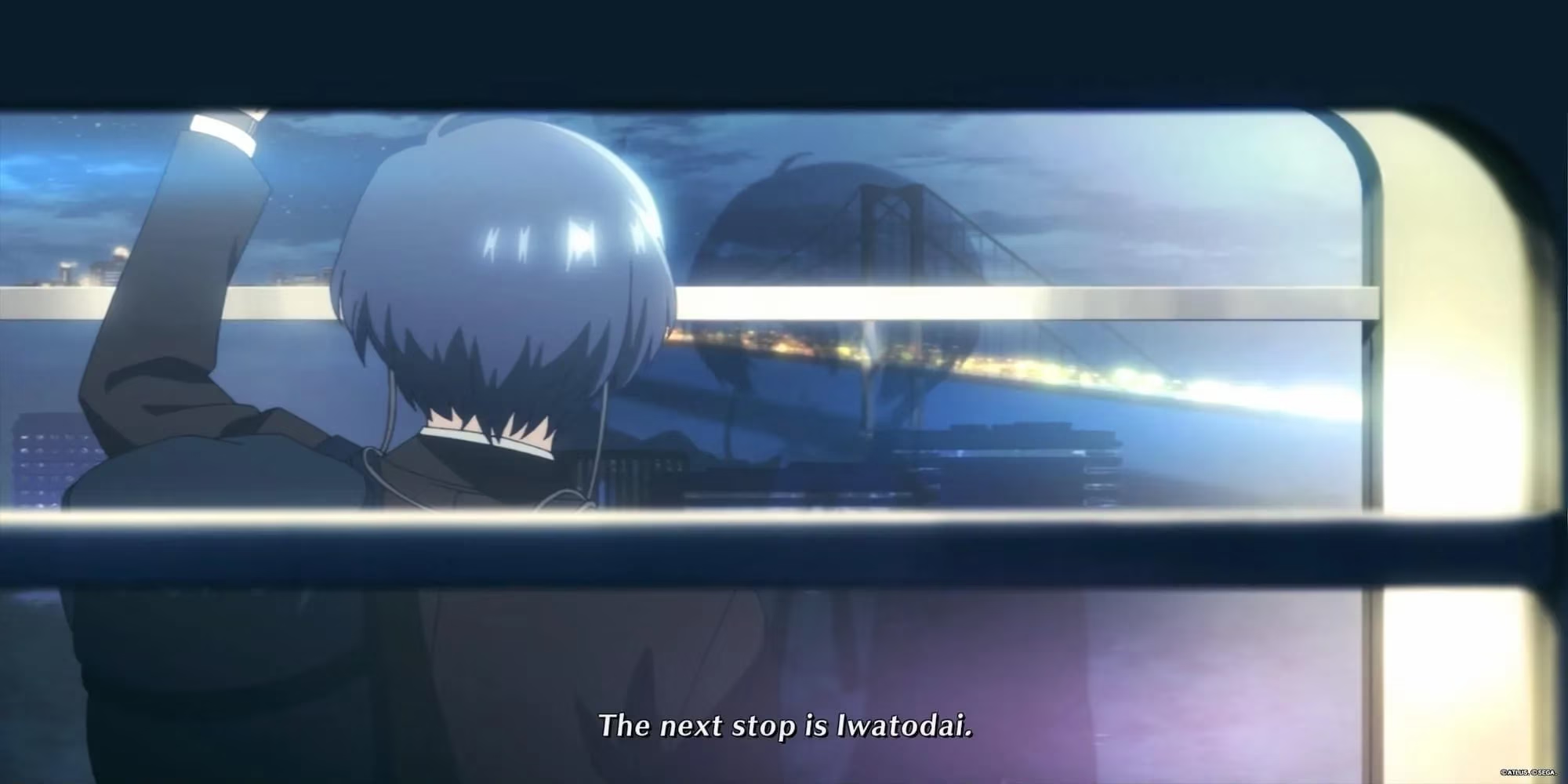
To the casual observer, the debate resembles a pair of identical vending machines, each dispensing the same cola but positioned on opposite sides of a hallway. Makoto Yuki and Minato Arisato are both “correct” in a historical sense, yet one carries an official seal that the other lacks. The scales tip decisively toward Makoto Yuki the moment a player digs into the game's settings. Switching the language to Japanese—or practically any non-English option—triggers a system prompt that autofills the name as Makoto Yuki. It's as if the game gently taps you on the shoulder and whispers, “We've been trying to tell you all along.” This isn't just a quirk of localization; it's the name used in Persona 3: Dancing in Moonlight, a spinoff developed by the same team that birthed the original story. The dancing game's existence is proof that even in a disco-lit spinoff, the protagonist remains Makoto Yuki, shimmying through moonlit tracks with a name stamped by Atlus itself.
The anime movie adaptations further solidify this canon, borrowing Makoto Yuki like a favorite hoodie and wearing it without doubt. Minato Arisato, by contrast, lives a quieter existence—relegated to the manga adaptation, where it's treated with the same reverence as a forgotten B-side track. The manga follows the game's story faithfully but tweaks small details, and crucially, it was never handled directly by Atlus. This absence of the developer's fingerprints gives Minato the aura of a plausible relic, a name that exists but wasn't ordained by the high priests of the Dark Hour. It's the difference between a diploma signed by the headmaster and one scribbled by a well-meaning substitute teacher.
Yet here's the beautiful absurdity: absolutely none of this matters to the game itself. The protagonist's name is a spectral presence, visible in text boxes and status screens, but never spoken aloud. No voice actor stumbles over a mispronunciation of “Xx_ShadowSlayer_xX.” Cutscenes dance around the issue with the grace of a ballerina avoiding a puddle, using placeholders like “this guy” or “leader” when the party descends into Tartarus. It's a linguistic workaround so seamless it could win an award for Most Diplomatic Dialogue Design. The protagonist, true to his silent nature, has so few scripted lines that the player's chosen name becomes a private joke, a secret handshake between the game and its gamer. The narrative treats him as a self-insert vessel, a hollow suit of emotional armor into which players are invited to crawl. Name him after yourself, and the story becomes a diary. Name him after a meme, and it becomes a fever dream. The game will never judge, only comply.
In the end, the war between Makoto Yuki and Minato Arisato is less a scholarly debate and more a hobbyist's crossword puzzle—satisfying to solve, but irrelevant to the commute home. The protagonist will still pull the trigger on his Evoker, still forge bonds that shatter hearts, and still stare into the abyss with an expression that could either be profound detachment or mild indigestion. The name is merely the first mask he wears, and by 2026, players have learned to don it quickly and move on to the real challenge: surviving a full moon without a healer. For those still paralyzed at the input screen, take heart from the game's own design. Pick Makoto Yuki for the official blessing, invent something ridiculous for the YouTube memories, or simply close your eyes and type. The name won't change the journey, only the flavor of the whispers you'll hear when the Dark Hour ends and the velvet room awaits.