Persona 3 Reload Switch 2 Port Sparks Fan Outrage Over Game-Key Card and DLC Pricing
The anticipated Switch 2 port of Persona 3 Reload has sparked controversy, being branded a 'ripoff' due to its Game-Key Card distribution and bafflingly expensive DLC structure, which demands extra payment for the complete story.
The recent Nintendo Partner Direct for 2026 left many fans underwhelmed, particularly those holding out for major announcements. While the absence of anticipated titles like Hollow Knight: Silksong was a letdown, it was the Persona community that felt a uniquely sharp sting. The presentation confirmed a Switch 2 port for Persona 3 Reload, but the accompanying details have been met with widespread criticism, branding the release a potential "ripoff." Fans are grappling with two core issues: the game's distribution method and its perplexing, expensive DLC structure on the new Nintendo hardware.
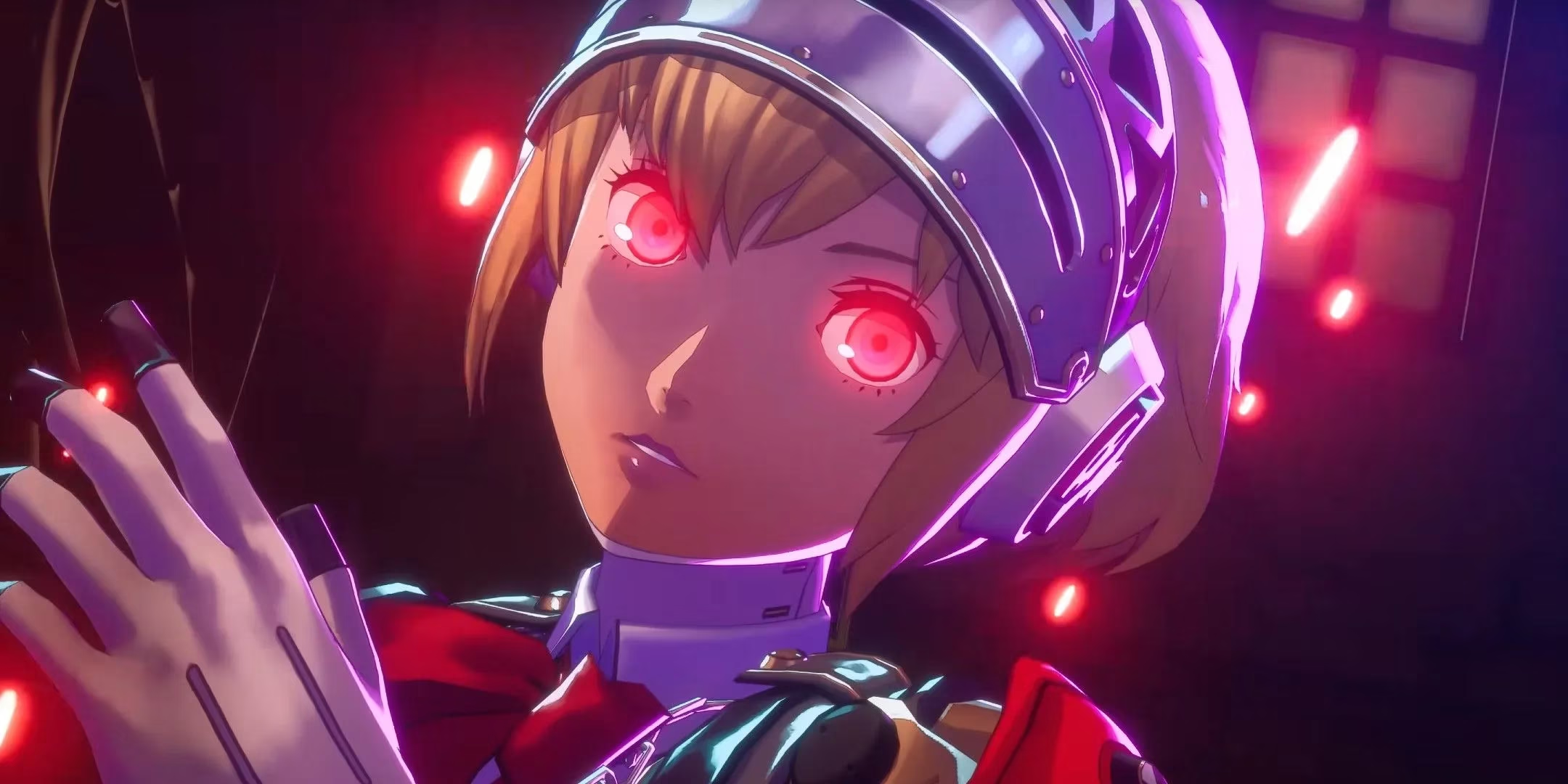
The Game-Key Card Controversy: A Blow to Preservation?
First and foremost, Sega confirmed through official channels that Persona 3 Reload on Switch 2 will be a Game-Key Card release. This decision has ignited a fierce debate about game preservation in the modern era. But what does this actually mean for players? Essentially, instead of receiving a game cartridge with the full title stored on it, purchasers get a physical box containing only a download code. The game itself must be downloaded from Nintendo's servers.
This model presents several concerns:
-
Long-Term Access: What happens if Nintendo's servers are eventually discontinued? The physical product becomes a worthless piece of plastic.
-
Storage Burden: Players are forced to use valuable internal or expanded storage on their Switch 2.
-
Precedent: Many had hoped Sega would follow the lead of its own Sonic Racing: Crossworlds, which launched on a full cartridge. This confirmation dashes those hopes, signaling that even publishers with a history of physical releases are embracing the key-card trend. Is this the inevitable future for physical media, or simply a cost-cutting measure that disadvantages the consumer?
The DLC Dilemma: Paying More for Less
If the distribution method wasn't disappointing enough, the handling of the game's major DLC, Episode Aigis, has added fuel to the fire. Persona 3 Reload will be nearly two years old by the time it launches on Switch 2 in 2026. Given this significant delay, wouldn't it be reasonable for fans to expect the DLC to be included, especially considering the initial backlash when the story content was locked behind a paywall?
Unfortunately, the reality is quite the opposite. Let's break down the baffling pricing structure:
| Edition | Price (Approx.) | Includes Episode Aigis? |
|---|---|---|
| Standard Pre-Order | ~$60 | ❌ No |
| Fancy Special Edition | ~$90 | ❌ No |
| Expansion Pass (Separate) | ~$35 | ✅ Yes |
As the table shows, even the premium $90 special edition does not bundle the crucial story DLC. To experience the complete Persona 3 Reload narrative on Switch 2, a player must spend a minimum of $95 ($60 for the base game + $35 for the pass). This is for a port of a game that is significantly cheaper on other platforms. Does this pricing strategy show a lack of respect for Nintendo players, or is it just standard practice for late ports?
Fan Reaction: From Anger to Resignation
The community's response has been swift and severe. On social media platforms, fans have labeled the port a "ripoff" and expressed deep frustration. Some are outraged by the perceived greed, while others have simply become numb to what they see as typical behavior from Atlus and Sega when it comes to pricing and port strategy. The sentiment is clear: why would anyone choose the Switch 2 version?
Consider the alternatives available in 2026:
-
PlayStation/Steam Version: Often available at a deep discount, includes all DLC in potential "Complete Edition" bundles, and offers superior performance.
-
Switch 2 Version: More expensive, requires a separate DLC purchase, uses the key-card system, and likely has visual/performance compromises.
The choice seems obvious, doesn't it? This situation forces fans into a difficult position: support their preferred portable platform or make a financially and practically sensible decision elsewhere.
Looking Ahead: What Does This Mean for Switch 2?
The Persona 3 Reload port announcement serves as a cautionary tale for the early days of the Switch 2. It raises critical questions about the value proposition of third-party games on the platform:
-
Will late ports consistently carry premium price tags without additional content?
-
Is the Game-Key Card going to become the default for major physical releases?
-
How can Nintendo and its partners justify higher costs for technically inferior versions?
For now, Persona fans are left with a bitter taste. The excitement of having a beloved title on a new console has been overshadowed by corporate decisions that feel out of touch with consumer expectations. The episode highlights an ongoing tension in the gaming industry between preservation, fair pricing, and platform parity. As we move further into 2026, players will undoubtedly be watching to see if this is an isolated incident or the start of a troubling trend for the Switch 2's library.
Key findings are referenced from GamesIndustry.biz, a leading source for game industry news and market analysis. Their reporting on physical media trends and DLC pricing strategies provides context for the growing concerns around game-key card releases and premium content models, echoing the frustrations voiced by Persona fans regarding preservation and value on new platforms.