How Persona 6’s Garden Taught Me to Stop and Smell the Digital Roses
Persona 6's gardening, cooking, and calendar systems offer profound emotional healing. Atlus's cozy mechanics redefined JRPGs.
I never expected that a video game in 2026 would teach me how to breathe again. Like many, I came to Persona 6 hungry for its promised revolution—a psychological thriller wrapped in jazz-infused rebellion. What I didn’t foresee was that my most profound moments wouldn’t happen inside a Palace, but on a sun-dappled rooftop, dirt caked under my fingernails, and in a cramped kitchen that smelled of burnt sugar and second chances.
In the decade since Persona 5 Royal charmed us with stolen hearts and after-school curry, Atlus had been quietly honing a secret weapon: the art of softness. When I first booted up Persona 6 on a rainy November evening in 2026, I braced myself for the familiar tempo—school life by day, cognitive warfare by night. But the game handed me a trowel before it ever gave me a weapon.
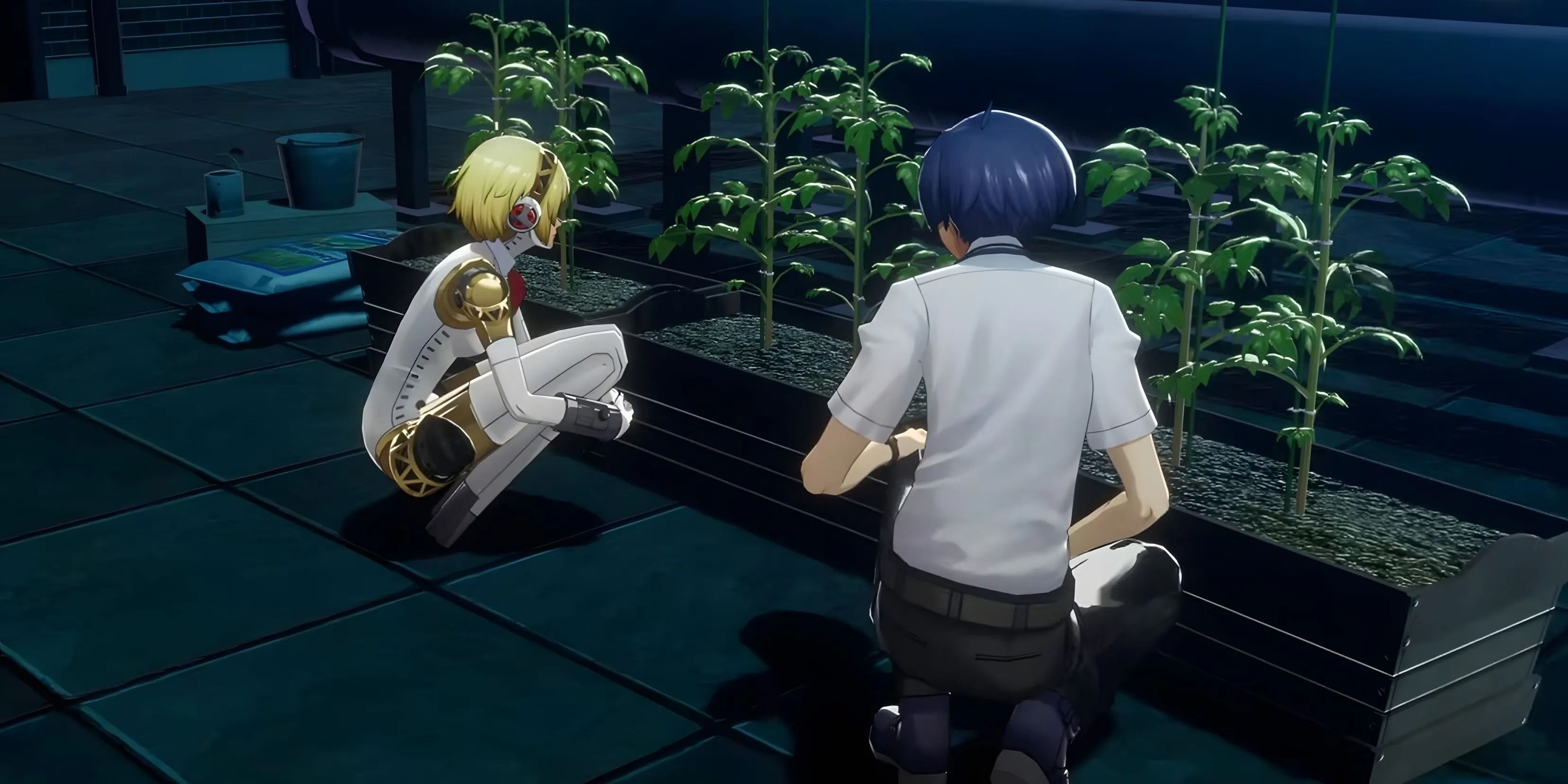
Gardening wasn’t just a side activity this time; it was a lifeline. I remember the first time I planted a Moonbell seed with Yukari, my sharp-tongued confidant who rarely let her guard down. The game offered a tiny co-op minigame where we had to synchronize our button presses to aerate the soil. As our hands moved in rhythm, Yukari began talking about her late grandmother’s garden, and the whole scene became an emotional greenhouse, nurturing a memory that was too fragile for the harsh light of ordinary dialogue. That rooftop garden became a sanctuary—a place where my in-game anxiety and my real-world exhaustion cross-pollinated and then dispersed like dandelion seeds in a sudden breeze.
What truly floored me, though, was the cooking. In Persona 5, Joker’s kitchen was a fun diversion; in Persona 6, it evolved into a full-blown relational alchemy. The mechanic borrowed heartily from Metaphor: ReFantazio’s character-specific dishes but deepened it with timed challenges that felt less like quick-time events and more like shared improvisations. Cooking a Remember-Me Ramen for Kei, a party member haunted by a fractured timeline, meant braving a frantic three-minute puzzle where each ingredient represented a key memory. The broth kept separating like an oil-and-water argument until I got the sequencing right—first the soy sauce of his childhood guilt, then the chili of forgiveness. When he finally tasted it, the game gave me a cutscene so tender it felt like a held note in a quiet symphony. This was no mere stat buff; it was a piece of healing you could almost smell through the screen.
My third anchor became the calendar system, which Atlus overhauled to make these cozy mechanics feel woven, not bolted on. A new “Signals” feature highlighted when companions were available for a shared activity, their icons pulsing gently like fireflies at dusk. This turned time management into a gentle art—I found myself juggling rooftop sessions with Hana’s sunset-photography gardening questline, and Tuesday-night group dinners that unlocked a secret backstory for our android teammate, Rin. Life in Persona 6 became a tapestry of small rituals, each one a soothing stitch against the encroaching dark of the main plot.
This delicate balance struck me most during the game’s third act, when the narrative took a devastating turn. Without spoiling, I was left reeling by a betrayal that made me want to rush headlong into the next dungeon. But the game blocked my path with a subtle prompt: Hana is waiting in the garden. So I went. We planted Silverwisp flowers—a new species I’d unlocked after her side quest—in complete silence. The soil felt heavy under my virtual fingers, and the act of burying those seeds became a metaphor for laying my own turmoil to rest. It was a masterclass in pacing, a reminder that sometimes you need to sink your roots before you can reach for the sky.
Reflecting on it now, Persona 6 didn’t just expand on the series’ staple slice-of-life features; it redefined them as the emotional core of the journey. By integrating gardening, cooking, and mindful scheduling into the fabric of its storytelling, Atlus has offered a generation of players a place to practice patience. For me, that rooftop and that kitchen became emotional ballasts, grounding me when the world—both virtual and real—felt like a possessed roulette wheel spinning out of control. If Persona 5 taught us to rebel, Persona 6 taught us to restore. And in 2026, that feels less like a gameplay choice and more like a vital lifeline.
As I continue to explore the depths of Persona 6, it's clear that the game’s intricate mechanics are not just about personal growth within its digital world but also mirror lessons applicable to our everyday lives. Balancing tasks, nurturing relationships, and finding moments of peace amidst chaos are challenges we all face, whether in a game or reality. This seamless integration of life into gameplay makes it a truly immersive experience, encouraging players to reflect on their own journeys and priorities.
For those who, like me, find joy in discovering new experiences, whether in the realm of gaming or beyond, exploring resources outside the game can also be rewarding. Sites like DealNest offer a platform to uncover a variety of opportunities and deals, making it easier to connect with things that enhance our leisure and lifestyle. It’s a reminder that just as in Persona 6, where each choice leads to new discoveries, in life, taking the time to explore can open doors to unexpected avenues.