Gaming's Most Terrifying Plagues: From Parasites to Divine Curses
Explore the most memorable in-game plagues and biological nightmares in gaming, featuring chilling digital pathogens and unforgettable outbreaks.
You know, as a lifelong gamer, I've faced down dragons, alien armadas, and ancient gods more times than I can count. But let me tell you something—none of those make my skin crawl quite like a well-designed in-game plague. There's something uniquely unsettling about watching a disease dismantle societies, transform bodies, and warp minds. Isn't it fascinating how these digital pathogens tap into our most primal fears? While we're living in 2026 with advanced medicine, these fictional outbreaks remind us how fragile our existence really is. Today, I want to walk you through some of gaming's most memorable biological nightmares—the ones that stuck with me long after I put down the controller.
10. Las Plagas - Resident Evil 4
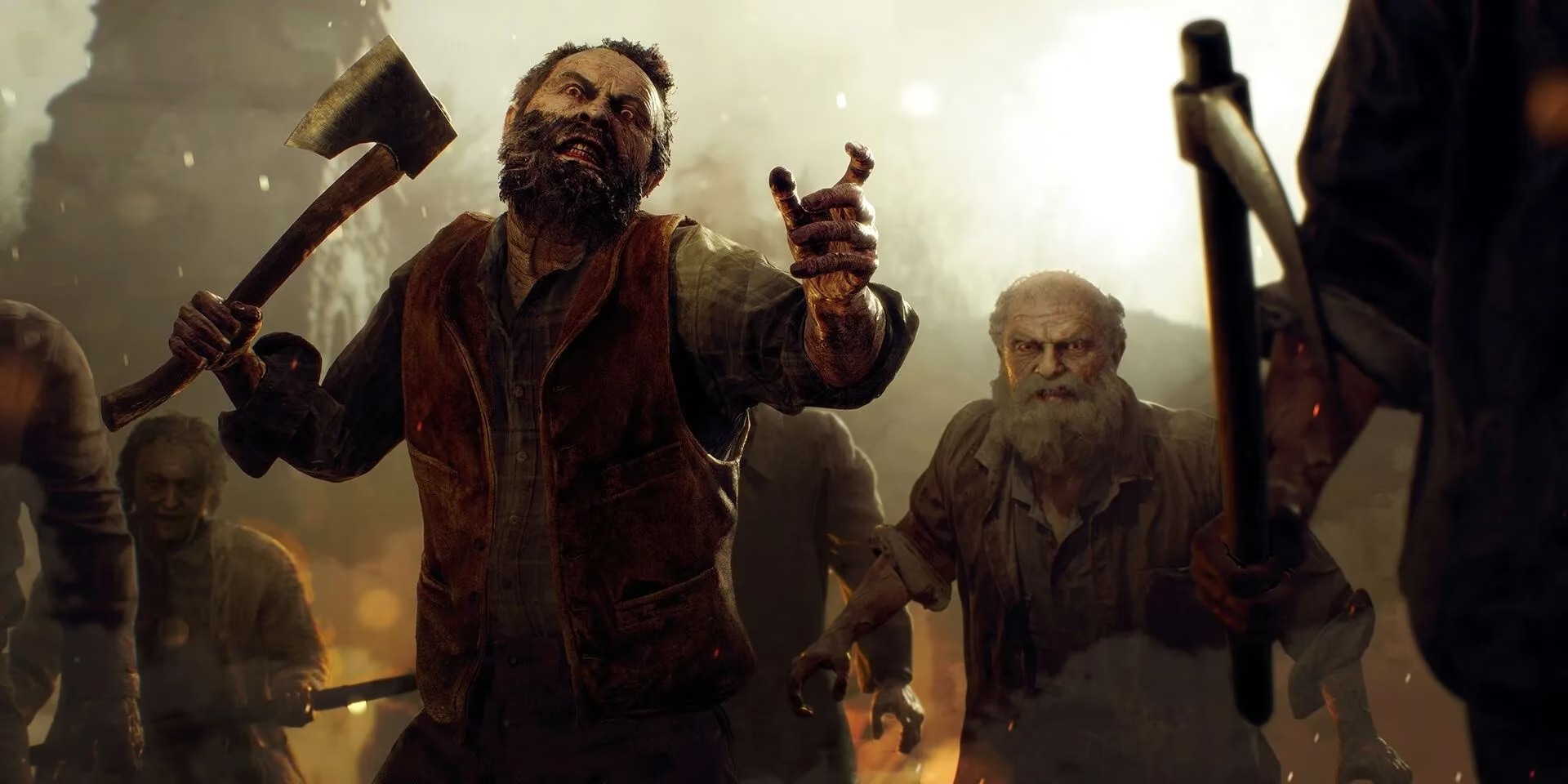
Let's start with the obvious—when a game puts "plague" right in the name, you know you're in for trouble! Las Plagas from Resident Evil 4 isn't some lab-made horror (well, not entirely). These parasitic arthropods have existed for thousands of years, preserved in amber until the Los Illuminados cult dug them up. What chills me most isn't the monsters they create, but the subtlety of early infection. Imagine your neighbor acting just a little... off. Slightly pale, eyes a bit red, maybe a little too aggressive about local zoning laws. Next thing you know, they're trying to plant a parasite in your neck! The Ganados maintain enough humanity to use tools and weapons, which somehow makes them scarier than mindless zombies. They're not just infected—they're organized. That's the real horror: a plague that doesn't just destroy society, but repurposes it.
9. Cordyceps Brain Infection - The Last of Us
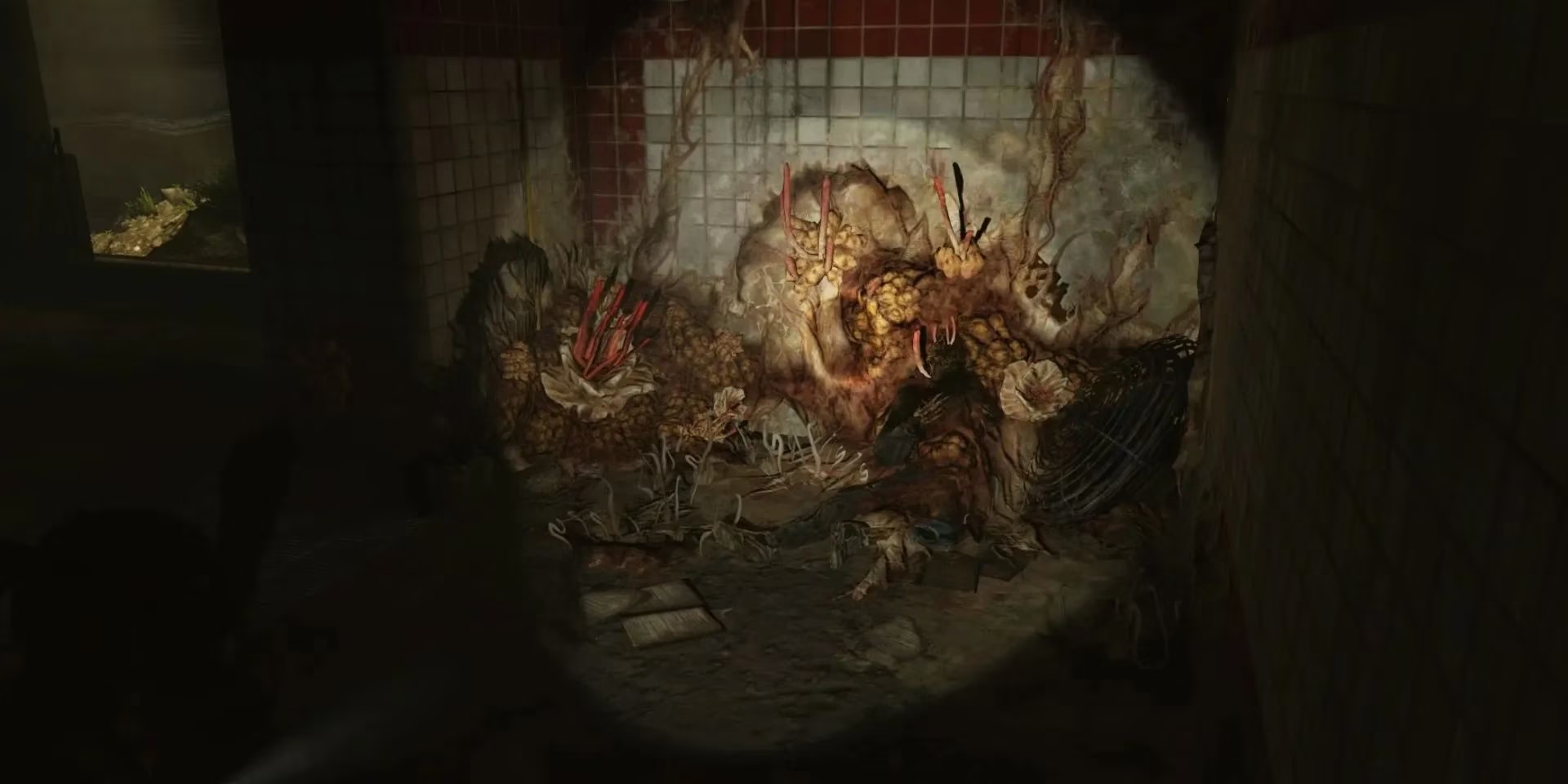
Now here's a thought that keeps me up at night: what if nature decided to upgrade? Real cordyceps fungi already pull off body-snatching horror shows with ants, but The Last of Us asks the terrifying question—what if it could jump to humans? This mutant strain doesn't just make you sick; it rewires your brain, turning you into a spore-spreading machine. The progression is what gets me:
-
Stage 1: Fever, confusion, aggression (Runners)
-
Stage 2: Fungal growth begins covering eyes (Stalkers)
-
Stage 3: Complete fungal takeover (Clickers)
-
Stage 4: Becomes a spore-producing structure (Bloaters)
What's truly genius about this plague is its realism. It spreads through crops and water—the very things that sustain civilization. The infected aren't supernatural; they're just biology gone wrong. When you think about it, isn't that the most plausible apocalypse scenario? Not aliens or nukes, but a simple fungus that out-evolved our defenses.
8. The "Bright Light" - Hollow Knight
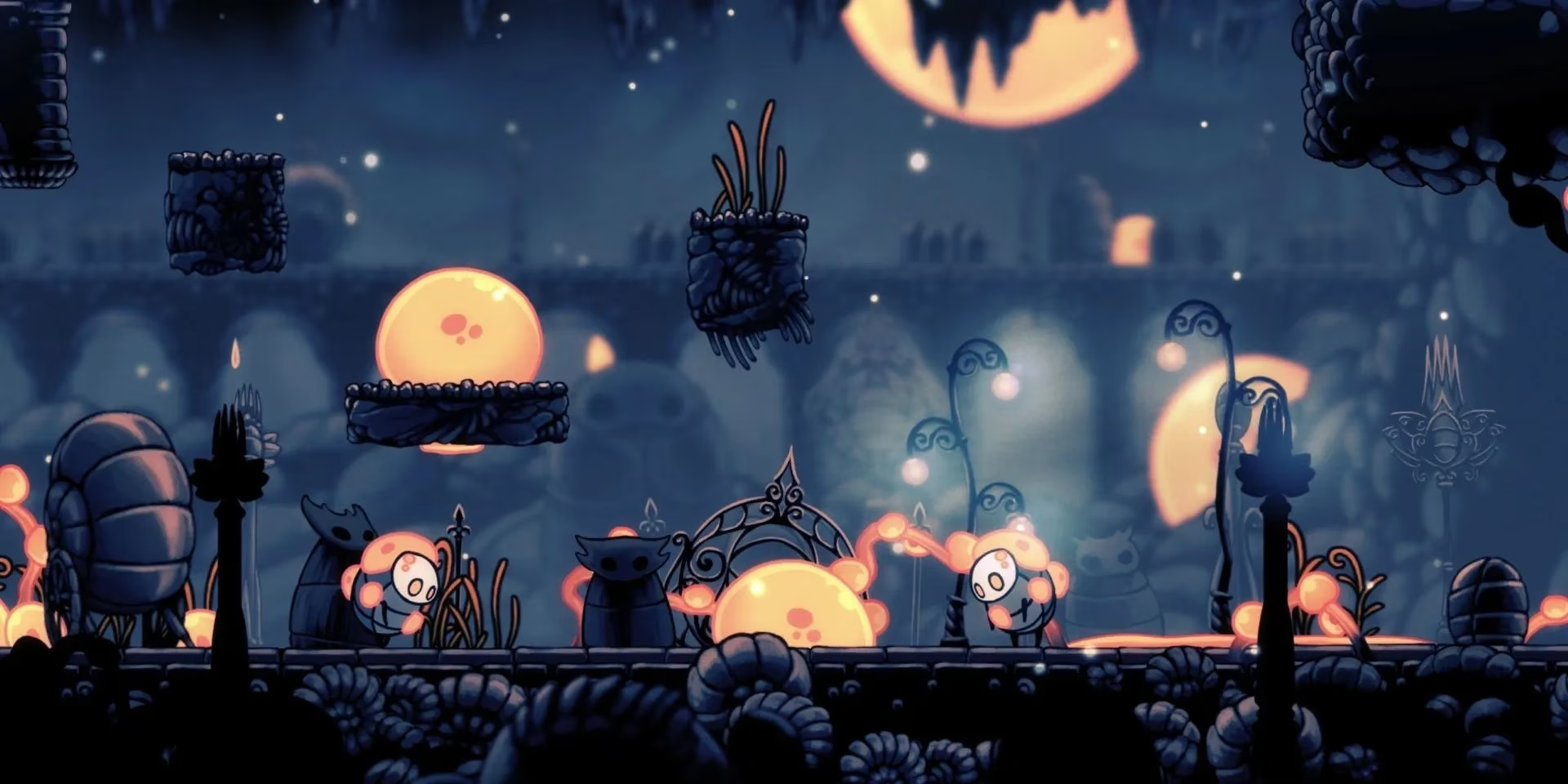
Who says plagues only affect humans? Hallownest's unnamed infection proves that insects aren't safe either! This "Bright Light" starts subtly—just bad dreams and whispers. But soon, that orange glow in their eyes signals complete mental takeover. What fascinates me is how this plague blends biological and spiritual corruption. The infected bugs don't just rot; they become zealots for the Radiance, an ancient moth god punishing her followers for forgetting her. The pustules that cover victims aren't just symptoms; they're temples to a forgotten deity. It's a plague of faith as much as flesh. And the worst part? The original containment vessel—the Hollow Knight—was supposed to be perfect. But nothing's ever perfect, is it? That tiny flaw, that sliver of mind, was enough for the infection to leak through and consume everything.
7. White Chlorination Syndrome - NieR Replicant

Talk about divine punishment! White Chlorination Syndrome isn't just a disease—it's a metaphysical ultimatum. When maso particles from a dead giant infect you, you get a choice: accept a pact with an extradimensional god and become a Legion monster, or refuse and turn into a pillar of salt. Either way, you're not human anymore. What haunts me about this plague is its sheer scale. That "snow" covering the world? That's everyone. Your neighbors, your family, entire cities—just salt statues waiting to crumble. And the survivors aren't much better off, living as soulless Replicants while their Gestalt souls slowly go mad. It's a plague that attacks humanity on every level: physical, spiritual, and existential. Makes you wonder—if a god offered you power in exchange for your humanity, would you take it? Or would you choose to become a monument to your own refusal?
6. Scarlet Rot - Elden Ring
Ah, Scarlet Rot—Elden Ring's gift that keeps on giving! This isn't just a disease; it's the physical manifestation of an Outer God's influence. When Malenia couldn't beat Radahn fair and square, she unleashed this ecological catastrophe that transformed Caelid into a fungal nightmare. What makes Scarlet Rot so insidious is how it reshapes everything it touches:
| Aspect | Effect |
|---|---|
| Plants | Become toxic, glowing fungi |
| Animals | Mutate into aggressive abominations |
| Landscape | Transforms into poisonous swamps |
| People | Lose their minds, become frenzied husks |
It's a complete ecosystem rewrite. And the worst part? Malenia didn't create it—she's just the carrier. The Rot God chose her as its vessel, and her "bloom" was just the beginning. Scarlet Rot doesn't just kill; it creates new, horrible life from the decay. That's true cosmic horror: not just destruction, but perverse creation.
5. Apathy Syndrome - Persona 3

Here's a plague that attacks not the body, but the soul. Apathy Syndrome victims don't rot or mutate—they just... stop. No will to eat, sleep, work, or even move. They become empty shells, moaning and staring at nothing. The terrifying truth? Shadows during the Dark Hour are literally eating people's drives to live. Your Shadow isn't just some monster—it's your id, your passions, your will to exist. Without it, you're just a biological machine with no programming. What scares me most about Apathy Syndrome is how plausible it feels. We've all had days where getting out of bed feels impossible. Now imagine that feeling never ends, and it's not depression—it's literal soul-theft. The members of S.E.E.S. fight this every night, knowing that anyone could wake up empty tomorrow. It's a quiet apocalypse, one lost soul at a time.
4. Green Flu - Left 4 Dead
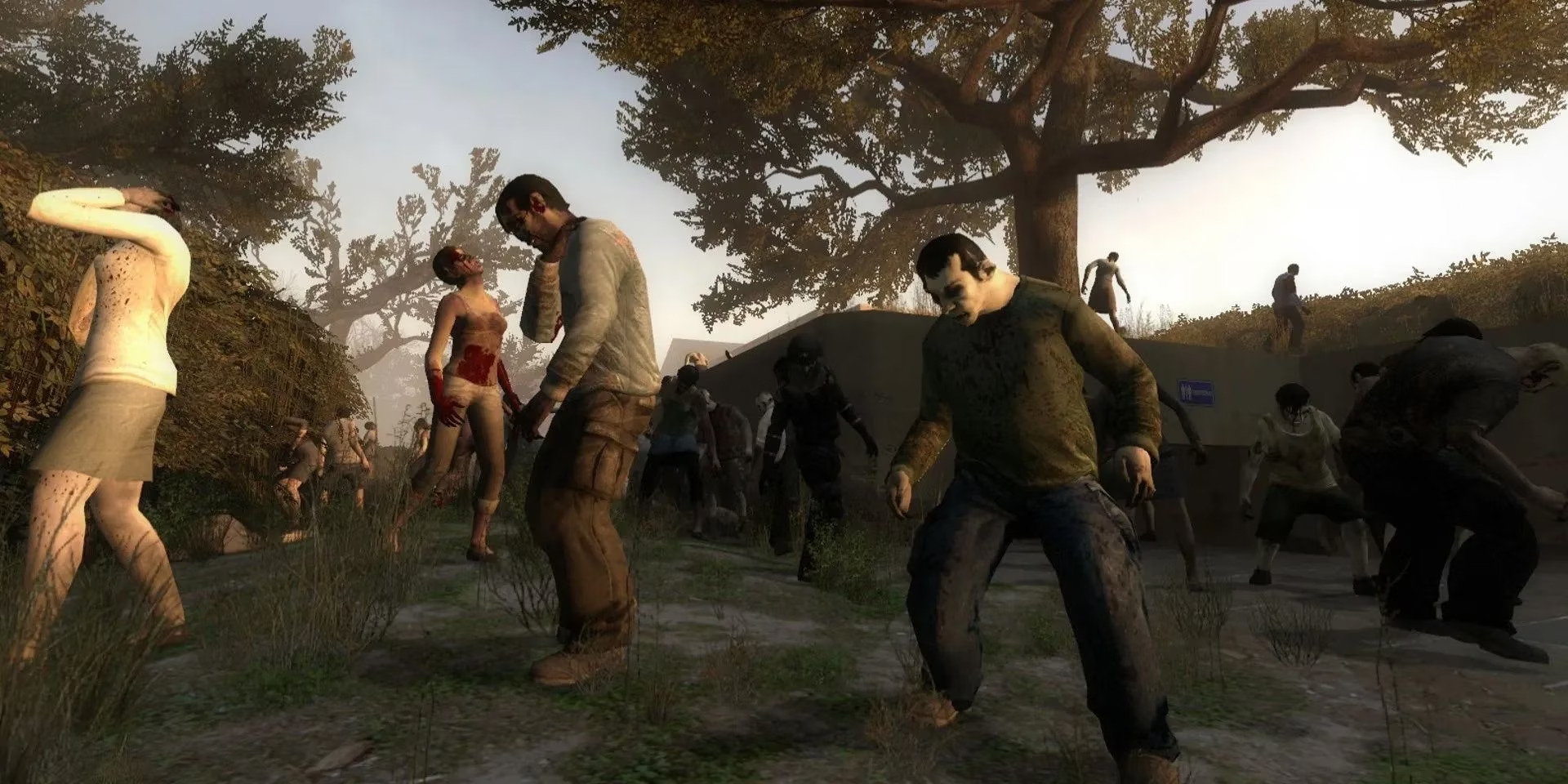
Remember when CEDA called it "just the flu"? Yeah, that aged like milk. Green Flu's genius—and horror—is its constant mutation. Just when you think you understand it:
-
😱 It develops new Special Infected types
-
😱 It changes transmission methods
-
😱 It evolves resistance to treatments
This isn't a static threat; it's an arms race where the enemy gets smarter every day. The Common Infected are bad enough—mindless rage monsters that'll beat you to death with their bare hands. But the Special Infected? They show what happens when the virus gets creative. Hunters that pounce, Smokers that drag, Boomers that... well, explode. Each mutation serves a purpose in spreading the infection further. And that's the real terror: you can't vaccinate against something that changes faster than you can study it. The comic was right—Green Flu isn't a disease; it's an evolutionary predator.
3. Rat Plague - Dishonored
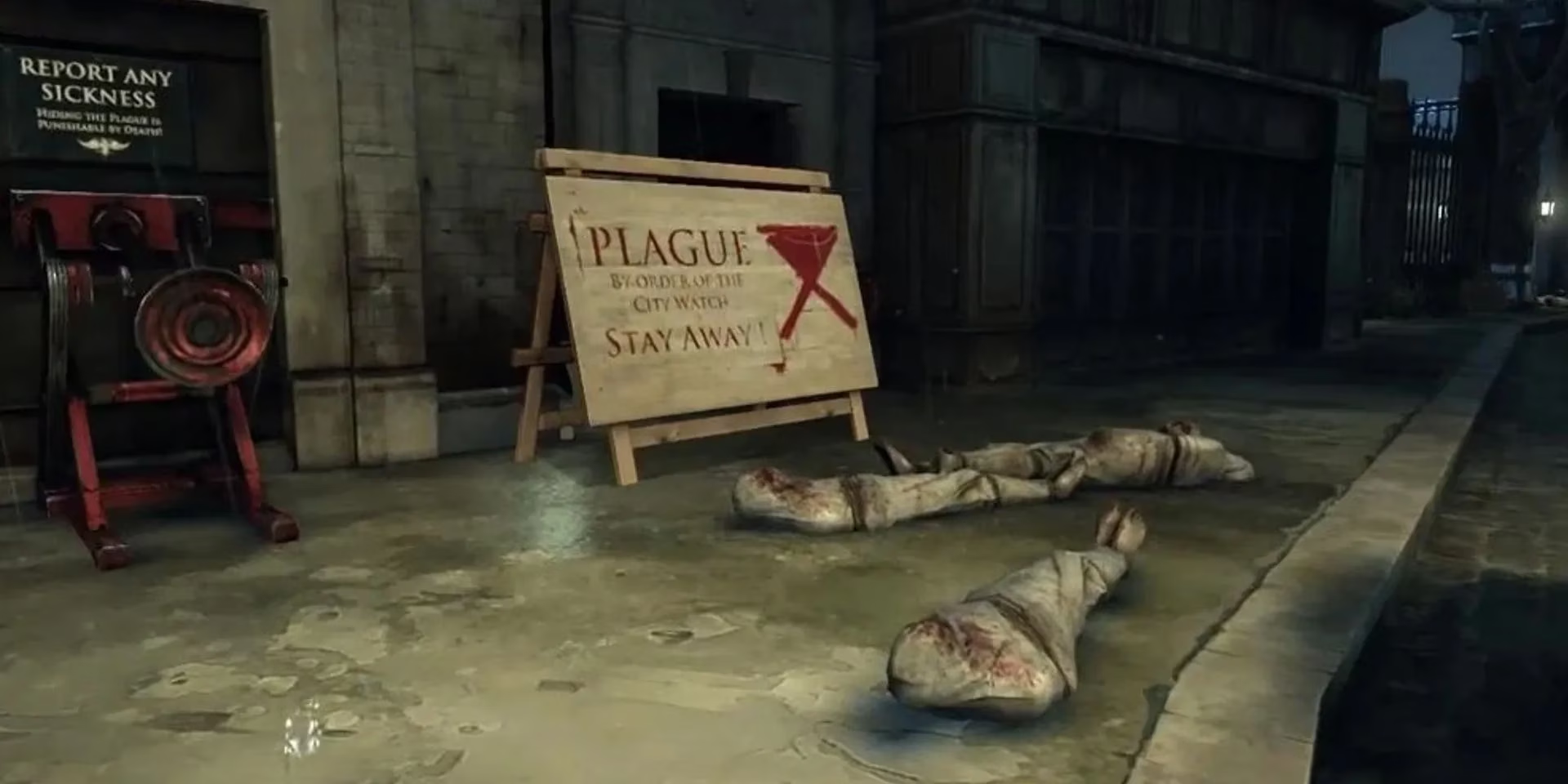
Historical accuracy with a horrific twist! Dishonored's Rat Plague takes the real Black Death and asks: "What if the rats themselves were the carriers?" Pandyssian Bull Rats don't just carry fleas—they're direct vectors through their bites. The progression is brutally methodical:
-
Stage 1: Skin discoloration, hair loss
-
Stage 2: Respiratory issues, cognitive decline
-
Stage 3: Hemorrhaging from the eyes ("Weepers")
What makes this plague especially cruel is its feedback loop. More deaths mean more corpses. More corpses mean more rats. More rats mean more infections. It's a downward spiral that turns cities into charnel houses. And the moral choice! As Corvo, every person you kill becomes rat food, accelerating the plague. It's a brilliant gameplay-narrative integration that makes you feel the weight of every action. The plague isn't just background; it's a character, and its hunger drives everything.
2. Tarkat - Mortal Kombat 1

Liu Kang's new timeline had one tiny flaw: he forgot to carry the 1 on Tarkatan genetics. Instead of a warrior race, Tarkat became a plague that physically and mentally regresses its victims. The mutations are straight body horror:
-
🔪 Blade-like bones erupting from flesh
-
😬 Razor-sharp teeth filling expanding jaws
-
🧠 Mental degradation into animalistic violence
But here's what gets me: this isn't just a disease; it's a social crisis. The infected aren't just sick—they're exiled. Banished to the edges of society because they look and act different. Mileena's story arc is particularly tragic. As the emperor's daughter, she has to hide her infection while watching her people suffer. Her outreach efforts at the game's end offer a glimmer of hope, but think about it: how many plagues in games get happy endings? Usually, the best you can hope for is containment, not cure.
1. You - Plague Inc.
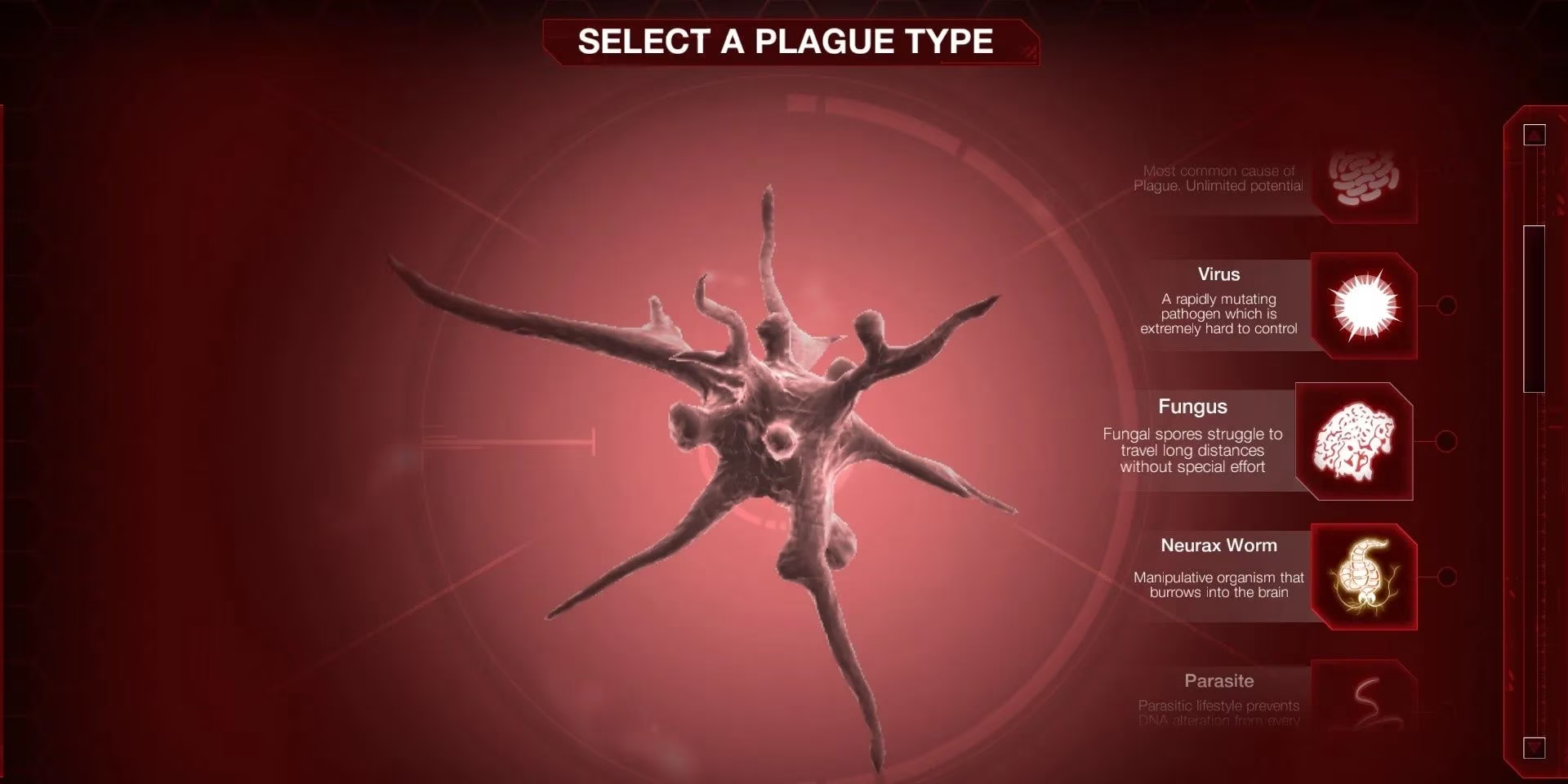
And now we come to the ultimate plague: you. Or rather, the pathogen you control in Plague Inc. This game flips the script entirely. Instead of surviving an outbreak, you engineer the perfect apocalypse. Starting as a simple bacteria or virus, you evolve traits to spread faster, kill more efficiently, and counter humanity's defenses. The genius is in the details:
-
🧬 Start in a country with poor healthcare
-
✈️ Develop air transmission
-
🦠 Mutate drug resistance
-
💀 Add lethal symptoms once worldwide
Playing Plague Inc. changed how I view pandemic narratives. Suddenly, I understood why diseases mutate certain ways, why governments make terrible decisions, and how easily our interconnected world can collapse. The most chilling realization? The game's strategies often mirror real-world pandemic concerns. When you're intentionally creating a pathogen that exploits every human weakness, you start to see how fragile our systems really are.
So what do all these digital plagues teach us? Maybe it's that our fear of disease isn't just about sickness—it's about loss of control, identity, and community. These games let us explore our deepest biological anxieties in a safe space, but they also hold up a mirror to real-world concerns. In 2026, we're better equipped than ever to handle pandemics, but these stories remind us that nature (and game developers) always have new horrors waiting in the wings. The next time you boot up a game and see someone coughing oddly, maybe give them some extra space. You never know what they might be carrying! 😷🎮