Elden Ring Parry Guide and Timing Tips
Mastering Elden Ring parry timing and tools transforms combat, enabling powerful ripostes against even tough bosses. Learn expert strategies now!
Learning how to parry in Elden Ring is one of those skills that can completely change how the game feels. What starts out as a brutal battle of attrition turns into something much sharper and more deliberate, where one clean deflection can shut down even dangerous humanoid bosses and open them up for huge damage. In this guide, we’re breaking down the actual parry timing, the best tools to use, where to practice, what attacks can be parried, and which bosses are genuinely worth learning the mechanic on.
How to Parry in Elden Ring
To parry in Elden Ring, you press L2 on PlayStation or LT on Xbox while holding a compatible shield or parry tool in your left hand. On PC, it’s tied to the secondary right mouse input by default, though you can remap it. The important part is that parrying works on a frame-based window: there’s startup, then a short active period where the parry can actually connect, followed by recovery where you’re wide open.
That active window is everything. If you hit L2 too early, the enemy attack lands during startup or after the active frames are gone. Too late, same problem. The best timing cue is the instant the enemy’s weapon or limb is about to connect with your character, not the start of the windup and not the end of the animation. Honestly, that contact-point read is what makes parrying start to feel consistent instead of random.
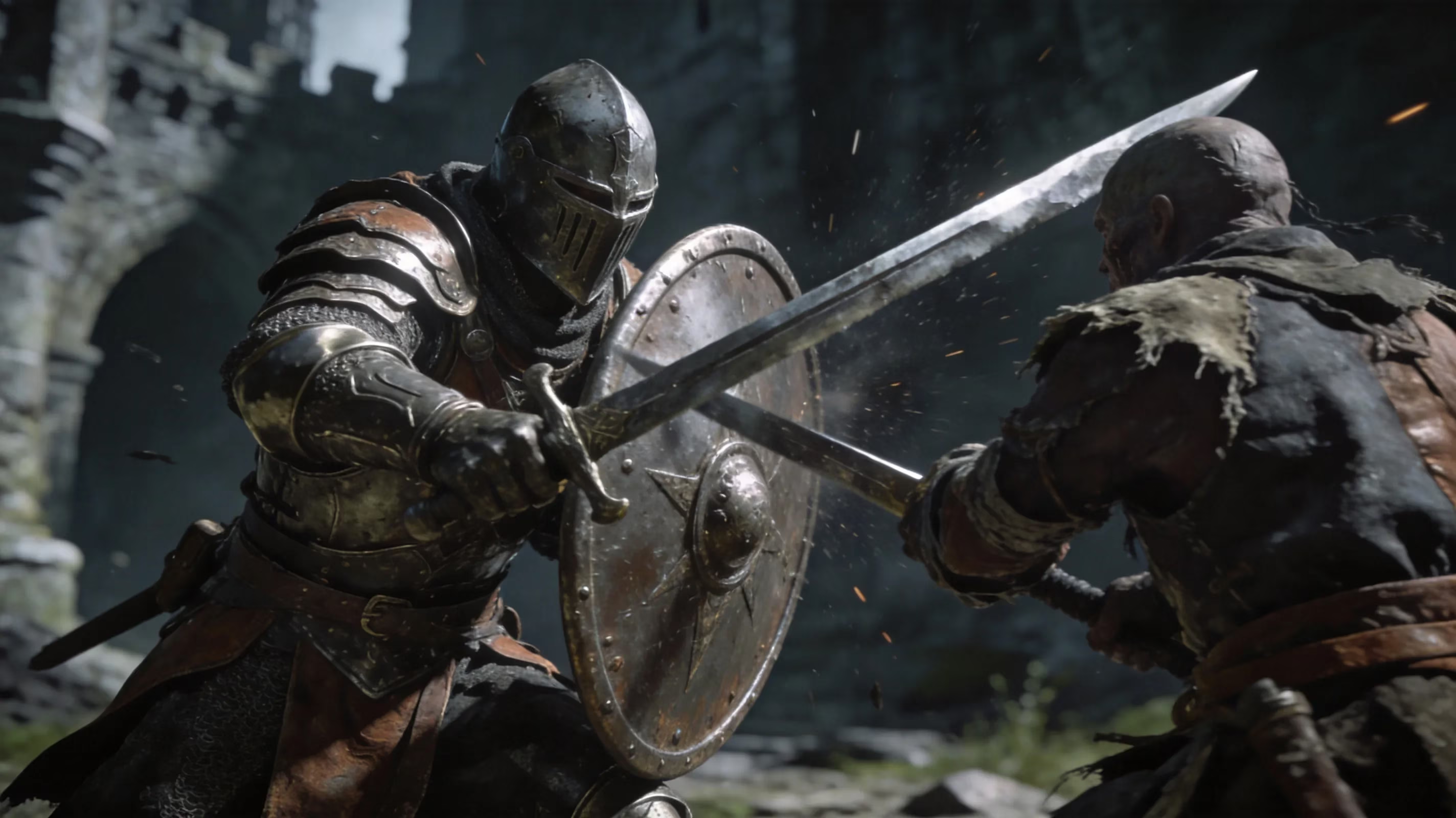
Different parry tools also change how forgiving the timing feels. Some have longer active windows, some start faster, and that’s a huge deal when you’re still building muscle memory.
When a parry lands, you’ll hear a sharp metallic clash and see a spark effect. The enemy gets staggered for a brief moment, and that’s your opening for a riposte. Walk right up in front of them and press R1 to trigger it. If you hesitate or end up slightly out of position, you can lose the punish window completely, so you want to move in immediately after the deflect.
Best Parry Tools in Elden Ring
Your parry tool matters more than a lot of players realize. Some options are way more forgiving than others, and if you’re trying to learn the mechanic, using the right shield or Ash of War makes the process much less painful.
| Tool | Type | Parry Window | Key Advantage | How to Obtain |
|---|---|---|---|---|
| Buckler | Small Shield | Longest in class | Most forgiving timing for beginners | Purchase from Gatekeeper Gostoc, Stormveil Castle (1,500 runes) |
| Buckler Parry (Ash of War) | Ash of War | Long | Applies Buckler-tier window to other small shields | Dropped or purchased; equip via Site of Grace |
| Golden Parry | Ash of War | Medium | Ranged parry hitbox, works at distance | Found in the Altus Plateau region |
| Carian Retaliation | Ash of War (Sorcery) | Medium | Parries spells, releases magic projectiles | Obtained from the Carian Study Hall area |
| Target Shield | Small Shield | Medium | Balanced block and parry option | Purchasable from various merchants |
| Heater Shield | Medium Shield | Short | More block utility, narrower parry window | Found in early Limgrave |
The Buckler is still the easiest recommendation for beginners, and for good reason. It gives you the longest active parry window on a standard shield, which means small timing mistakes are less likely to get you punished. You can buy it from Gatekeeper Gostoc in Stormveil Castle for 1,500 runes, so it’s available pretty early.
If spacing is your issue, Golden Parry is incredibly useful. Its Ash of War sends the parry hitbox outward, so you don’t have to be standing right on top of the enemy for the deflection to register. That extra reach makes a real difference against long weapons and awkward enemy spacing.
Then there’s Carian Retaliation, which plays by different rules. Instead of focusing on melee, it lets you parry incoming sorceries and certain projectile Ashes of War, then fires back homing glintblades. Those retaliatory blades scale with Intelligence and the Magic affinity on the weapon using it, so it’s especially strong on INT builds. Against mage enemies in PvE or spell-heavy players in PvP, it’s basically a built-in counterattack.
Elden Ring Parry Timing and Practice Route
If you want parrying to become reliable, the fastest way is simple: repeat it in low-risk fights until the timing becomes automatic. Early Limgrave and Stormveil give you some of the best practice targets in the game.
A great starting point is the Godrick Soldiers around the Gatefront Ruins Site of Grace. Their one-handed sword attacks are readable, not too fast, and not so slow that they throw off your reaction timing. If you force yourself to defend with parries only against a few soldiers in a row, you’ll improve much faster than if you just toss in the occasional attempt between rolls.
Once that starts to feel natural, move on to the Crucible Knight. You can fight one in Stormveil Castle, and there’s also the Limgrave Evergaol version if you want a dedicated training boss. He hits hard enough that missed parries hurt, but his moves are deliberate and consistent, which is exactly what makes him such a strong rhythm check. His overhead swings, horizontal slashes, and shield bash are all solid parry practice. Just remember: the tail swipe in later phases is not parryable, so dodge that one.

PvE and PvP also feel very different here. Against AI enemies, timing becomes learnable because their patterns are stable. In PvP, latency and player-controlled timing make parries much less predictable. Human opponents can delay attacks, bait your input, or vary their rhythm in ways normal enemies won’t. So if your goal is Colosseum duels or invasions, PvE practice helps, but it won’t fully prepare you on its own.
What You Can Parry in Elden Ring
Knowing what actually qualifies for a parry is a big part of using the mechanic well. A lot of failed attempts come from trying to parry moves the game simply doesn’t allow.
You can parry most melee attacks from humanoid enemies, including:
-
Standard one-handed swings
-
Many two-handed weapon attacks
-
Running attacks
-
A lot of delayed or charged melee swings
-
Some jumping attacks from humanoid enemies
Jumping attacks are a little trickier because of the angle and timing, but they are still possible in many cases. This is why parry builds work so well against soldiers, knights, duelists, invader-type enemies, and a good number of humanoid bosses.
Carian Retaliation adds another category by letting you parry certain sorceries and magic-based Ashes of War. If you want to turn ranged spell pressure into free damage, that’s the tool for it.
What you cannot parry is just as important:
-
Grab attacks
-
Area-of-effect explosions
-
Environmental hazards
-
Most attacks from large non-humanoid enemies
-
Specific boss moves flagged as unparryable
That includes things like dragons, dogs, bears, trolls, and other large beast-type enemies. If an enemy goes for a grab and you try to parry it, you’re just getting hit. The Elden Beast is a good example of a boss that might look parryable at first glance but isn’t. At the end of the day, parry is a specialized answer for humanoid combat, not a universal defensive mechanic.
Best Weapons and Riposte Setups After Parry
Landing the parry is only half the job. The real payoff comes from the riposte, and the weapon you use for that follow-up has a huge impact on your damage.
Riposte damage scales off the weapon’s attack rating and its critical modifier. Most weapons sit at a critical value of 100, but some go higher and become much better for parry-focused setups. The Lordsworn’s Straight Sword, which you can get in Gatefront Ruins, has a critical modifier of 110. That extra 10% adds up over the course of a long fight, especially if you’re landing repeated parries. For early-game players, Buckler in the left hand and Lordsworn’s Straight Sword in the right is one of the cleanest setups you can run.
If you want maximum riposte damage, the Misericorde is the standout pick. It has a massive 140 critical modifier, the highest in the game, so its ripostes hit way harder than almost anything else against parryable targets. It also doesn’t ask for heavy stat investment, which makes it easy to slot into lighter Dexterity-leaning builds. The downside is obvious: outside of crits, its normal damage isn’t nearly as impressive, so it works best as a dedicated punish weapon rather than your main combat tool.
A few setup notes matter here too:
-
Exalted Flesh is a strong pre-fight buff if you know you’re going for parry punishes
-
Damage-boosting talismans can help, especially if your rotation includes Ashes of War
-
Staying below 70% equip load is important so you keep a medium roll
That last point matters a lot more than it sounds. If you miss a parry, you need to recover, reposition, and dodge cleanly. Heavy load makes that much harder.
Elden Ring Bosses and Enemies Worth Parrying
Margit
Margit is a decent early boss to parry, but you need to be selective. His staff swings and single-handed sword attacks can be parried, while his golden dagger summons and several of his more magical follow-ups cannot. The safest windows usually come from his basic horizontal and downward swings.
The trick with Margit is not getting greedy. If you try to parry every animation in his kit, you’ll eat a lot of damage from the unparryable stuff mixed into his strings. Focus on the clear melee swings, take the riposte when it’s there, and you can cut down the fight dramatically with just a few successful deflections each phase.
Crucible Knight
The Crucible Knight is easily one of the best parry practice bosses in Elden Ring. A lot of experienced players still go back to the Limgrave Stormhill Evergaol version just to drill timing. His attacks are punishing, yes, but they’re also consistent enough that you can really learn from each miss.
His horizontal slashes, overhead chops, and shield bashes are all strong parry targets. Once the later phase starts, though, the rules change a bit. The tail attack and aerial dive are not worth trying to parry, so those should be treated as dodge-only moves.
Bell Bearing Hunters
Bell Bearing Hunters are another enemy type that rewards parrying in a big way. They show up at certain merchant locations at night, and when you stay close, a lot of their sword attacks become very manageable parry opportunities. A few clean deflections into ripostes can chunk their health bar hard.
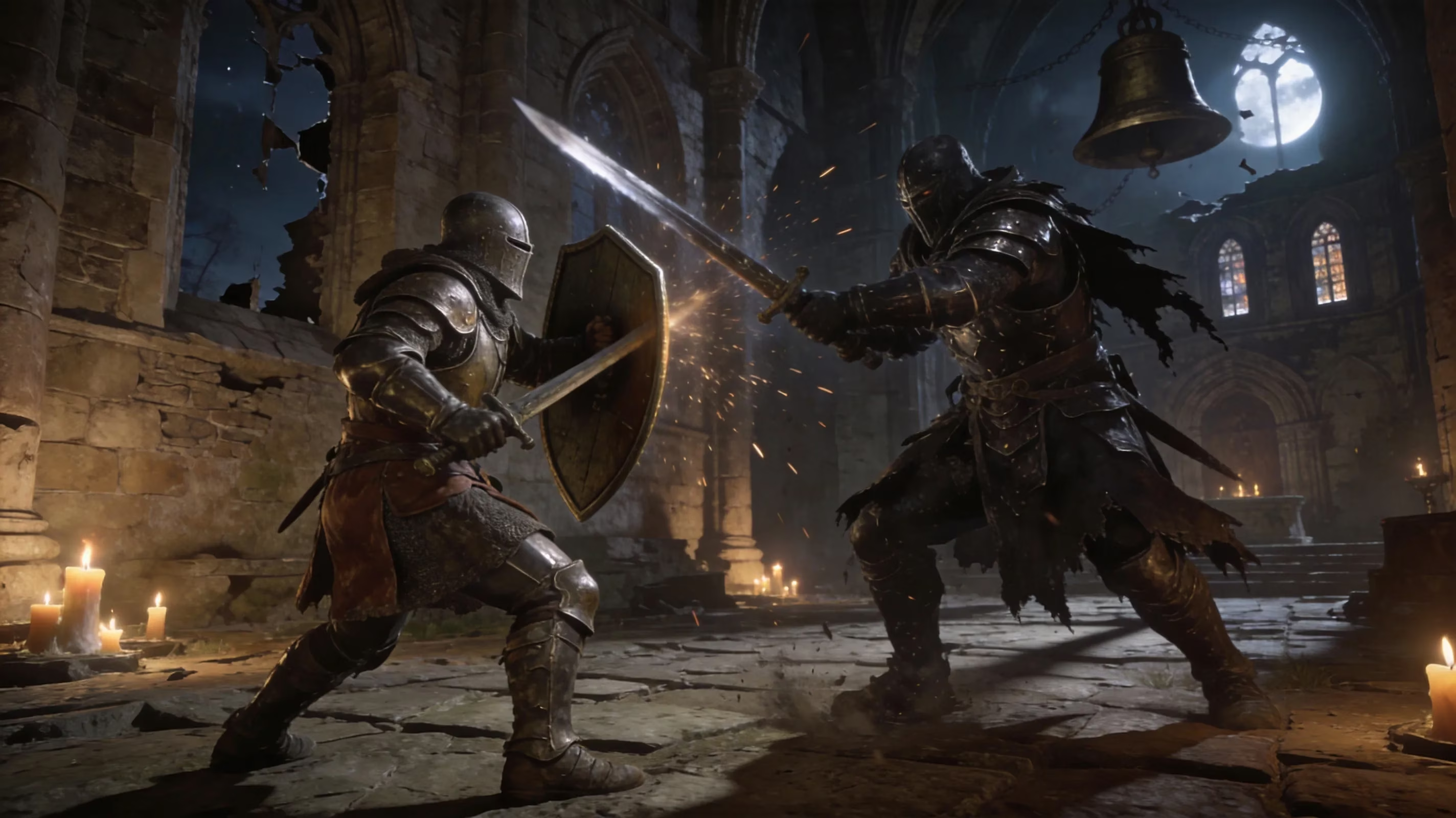
The one move you need to respect is the telekinetic ranged attack where they fling debris or gravestones at you. That cannot be parried, so your answer there is to dodge or block. In general, staying near them is the better plan anyway, since it pushes them into their sword-based patterns where your parry chances are much better.
Elden Ring Parry FAQ
Why does parrying feel inconsistent even when the timing seems right?
Usually it comes down to one of three things: your shield has a shorter active window than you expected, you were slightly out of range for the parry hitbox, or the move itself wasn’t parryable in the first place. Swapping to the Buckler fixes a lot of early frustration. In multiplayer, latency can also make the timing feel off even when your read looks correct.
What is the best shield for beginners learning to parry?
The Buckler is the clear answer. It has the most forgiving active window of any standard shield, weighs only 1.5, and you can get it early enough to matter. If you’re just starting out, this is the tool you want.
Can two-hand weapons parry?
Not normally. If you’re two-handing your weapon, you lose the left-hand shield function, which means no standard parry. Some weapons can use parry-type Ashes of War with L2, but those behave differently and come with their own timing and range quirks.
Is parry worth learning?
Yes, if you’re willing to put in the reps. A successful parry into riposte gives melee builds some of the best burst damage available without demanding a weird stat spread. More than that, it changes your whole approach to humanoid fights. Instead of only rolling and waiting, you start controlling the pace and punishing attacks on your terms.
Conclusion
Parrying in Elden Ring takes practice, but the payoff is absolutely real. The core setup is available early, the timing can be learned with repetition, and once it clicks, humanoid fights become way more controlled and much more rewarding. If you want the cleanest starting point, go with Buckler in the left hand and Lordsworn’s Straight Sword in the right, practice on Godrick Soldiers, then test yourself against the Crucible Knight before taking that confidence into fights like Margit or the Bell Bearing Hunters. Clean ripostes, faster kills, and a much sharper playstyle are waiting once the timing finally sticks.