Elden Ring Beginner Guide and Gameplay Tips
Mastering Elden Ring's challenging soulslike gameplay begins with essential beginner tips, from unlocking Torrent and the Spirit Calling Bell to choosing the best starting class like Vagabond or Samurai.
Figuring out how to play Elden Ring is really about learning what the game expects from you. This is FromSoftware's open-world action RPG, released in February 2022 and built with worldbuilding help from George R. R. Martin, and it still pulls in new players in 2026—especially now that Shadow of the Erdtree has pushed interest back up again. Elden Ring is a soulslike through and through: you will die, you are supposed to read enemy patterns, and the game rarely hands you a clean win. Once that clicks, the whole thing stops feeling unfair and starts feeling incredibly satisfying. This guide covers the essentials for new players, from the first hour and starting class picks to combat basics, early progression, summons, and the first real boss path.

How to Play Elden Ring: Your First Hour
Elden Ring's opening is meant to throw you off a little. After character creation, you wake up in the Cave of Knowledge, which is the game's short tutorial area for attacking, rolling, blocking, and resting at Sites of Grace. At the end, you run into the Grafted Scion. You are not expected to win that fight.
If you die there, that is the tutorial working as intended. Elden Ring teaches early that death is part of the loop, not a special punishment. Once you respawn in Limgrave, the world opens up immediately, and the first thing many players see is the Tree Sentinel patrolling the road north. Do not fight him yet. Just ride or walk past and head toward the Church of Elleh.
At the Church of Elleh, you meet Merchant Kale, your first real shopkeeper. He sells arrows, basic crafting materials, and a few early essentials. From there, keep resting at Sites of Grace as you move through Limgrave, and you'll eventually trigger Melina's cutscene.
Accept her accord. That gives you the Spectral Steed Whistle and unlocks Torrent, your spectral mount. Torrent is a massive quality-of-life boost right out of the gate because he speeds up exploration, lets you double jump, and makes it much easier to disengage from fights you clearly should not be taking yet.
There is one more early pickup you really do not want to miss. Return to the Church of Elleh at night, and Renna the Witch appears sitting on the church wall. She gives you the Spirit Calling Bell and the Lone Wolf Ashes, which unlock your first Spirit Ash summon.
If you do nothing else in your first hour, make sure you get these two things:
-
Torrent from Melina
-
Spirit Calling Bell from Renna at night in the Church of Elleh
Those two tools carry a huge amount of early-game comfort, and honestly, the game feels way smoother once you have both.
Best Starting Class and Keepsake in Elden Ring
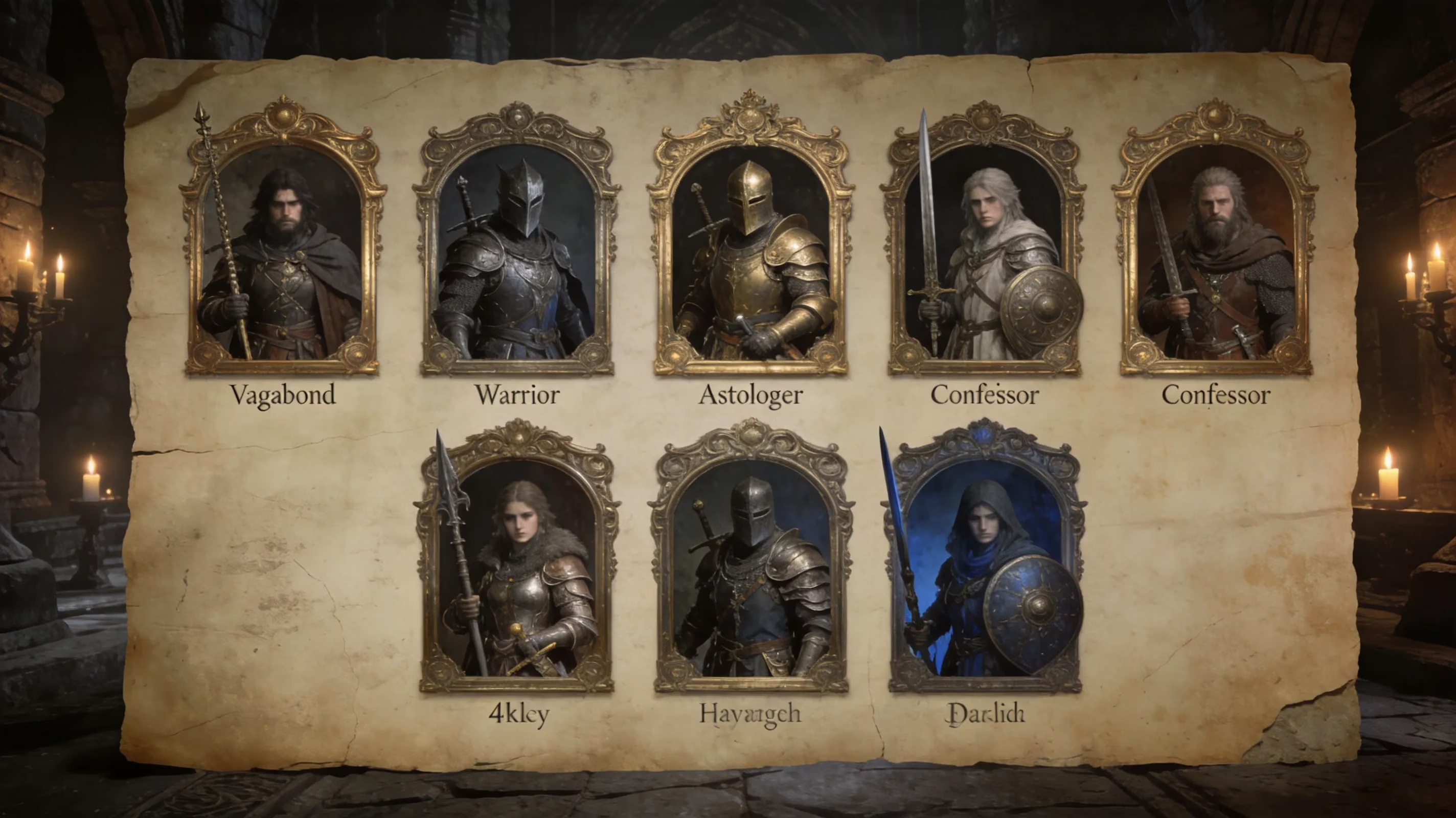
Your starting class matters most in the opening hours. It sets your initial stats and gear, but it does not lock you into a permanent build forever. Later on, Rennala at Raya Lucaria Academy lets you respec, so this is more about getting a comfortable start than making a life-defining choice.
Here's the quick-pick table for beginners:
| Class | Playstyle | Strengths | Recommended For |
|---|---|---|---|
| Vagabond | Melee (sword and shield) | High Vigor and Strength, good starting armor | First-time players, any melee build |
| Samurai | Melee (katana) + ranged | Uchigatana with innate bleed, Longbow for pulling | Dexterity builds, confident beginners |
| Astrologer | Ranged sorcery | Highest starting Intelligence, ready-to-use staff | Players who want to cast spells from a distance |
| Confessor | Hybrid melee + incantation | Early access to healing spell, sword and shield | Those curious about Faith-based casting |
| Wretch | Blank slate | All stats at 10, total flexibility | Experienced players only |
For a first playthrough, Vagabond is still the safest recommendation. The 15 starting Vigor gives you more room for mistakes, the shield makes early encounters much less punishing, and the longsword stays useful well beyond Limgrave. If you are new and just want a stable opening, this is the pick.
Samurai is also excellent, but it asks a bit more from you. The Uchigatana's bleed is strong, and the Longbow is great for pulling enemies one by one, which is a big deal in camps and dungeons. If you like faster melee and feel comfortable playing a little more proactively, Samurai is a very good alternative.
Astrologer is the easiest way to play at range early. You start with the Intelligence to cast immediately and a staff that works right away, so you can avoid a lot of close-range pressure while learning the game. That said, spellcasting can make some early fights easier while also teaching you less about spacing and melee timing, so it depends on what kind of first run you want.
For Keepsakes, two options stand out:
-
Golden Seed: gives you one extra Sacred Flask use immediately
-
Stonesword Key: opens imp statue barriers with early loot behind them
If you want the smoother start, take the Golden Seed. More healing in the first few hours is just more useful, more often. The Stonesword Key is still a solid pick, especially if you already know where you want to use it, including the locked barrier tied to strong loot in Stormveil Castle's inner areas.
The big thing to remember is this: your class shapes the start, not the whole run. You can commit lightly now and clean things up later with a respec.
Elden Ring Combat Basics for Beginners
Elden Ring combat is not about mashing faster. It is about spacing, timing, and not wasting stamina. If you are struggling early, it is usually one of those three things.
The first habit worth building is lock-on. Press L3 on controller to lock onto a target. That keeps the camera centered and makes enemy animations much easier to read, especially against humanoid enemies and bosses that punish bad camera control as much as bad positioning.
Your main defensive tool is the dodge roll. Rolls have i-frames, short windows of invulnerability where attacks pass through you without dealing damage. This is why rolling into or through an attack often works better than panic-rolling backward.
Your roll quality depends on equip load. Stay under 70% of your maximum load so you keep a medium roll. Go over that, and you get the heavy "fat roll," which is slower and gives you fewer i-frames. A lot of new players make the game harder on themselves just by wearing too much armor.
Here's the beginner-friendly combat core:
-
Lock on to keep enemy movement readable
-
Stay at medium load for a reliable roll
-
Watch stamina so you can still dodge after attacking
-
Roll through attacks, not always away from them
Two mechanics are especially strong early: guard counters and jump attacks.
A guard counter happens when you block an attack with a shield and immediately press heavy attack (R2/RT). It deals huge stance damage and will stagger many regular enemies in one or two hits. Against early mobs, it is one of the most efficient tools in the game.
A jump attack does similar work. Jump and press heavy attack while airborne, and you get strong poise damage with a hitbox that can also beat some enemy guard. This is part of why jump-heavy attacks became such a staple for early melee builds—they are simple, safe enough, and they hit hard where it counts.
That leads into stance breaks. Enemies have a hidden poise or stance meter. When enough stance damage builds up, they stagger and open up for a critical hit. Walk up to the staggered enemy and press light attack for a riposte. Once you start landing guard counters and jump attacks consistently, you will trigger these openings way more often.
So if you want one practical early-game combat loop, it is basically this: block or space the first hit, punish with a guard counter or jump attack, then cash out on the critical when the stance breaks. It is simple, and it works.
How to Progress in Elden Ring Early Game
Elden Ring gives you freedom early, but there is still a pretty clear route that makes the opening much smoother. In Limgrave, start by clearing the Gatefront Ruins near Stormveil's entrance. That gets you the Whetstone Knife, which unlocks Ash of War customization at Sites of Grace.
From there, the Stormfoot Catacombs northwest of the First Step are a good early stop. They offer decent rune income and a useful Spirit Ash-related reward. After that, head to the Limgrave Tunnels south of Agheel Lake for Smithing Stones.
This part matters a lot: weapon upgrades matter more than character levels in the early game. Taking a weapon from +0 to +3 with Smithing Stones [1] gives a much bigger immediate damage jump than spreading those same early gains across a few levels. If Margit is your target, your weapon should be at least +3 first.
For leveling, put your early runes into Vigor. Seriously. A lot of beginner frustration comes from getting deleted in one or two hits, and raising Vigor fixes that faster than chasing damage stats does. Getting to around 20 Vigor before heavily investing in Strength, Dexterity, or Intelligence is the safer play.
A simple early priority list looks like this:
-
Get Torrent and the Spirit Calling Bell
-
Clear Gatefront Ruins for the Whetstone Knife
-
Run Limgrave Tunnels for Smithing Stones
-
Upgrade your main weapon to +3
-
Raise Vigor to around 20
-
Start preparing for Margit
Sites of Grace also help with direction. The golden trails coming off them point toward the next major objective, so if you feel lost, follow the light. But you should not treat that as a strict path. If you see a cave, catacomb, evergaol, or side dungeon nearby, it is usually worth the detour.
That is one of the smartest things Elden Ring does. Optional exploration is not filler. It gives you runes, upgrade materials, Spirit Ash resources, and sometimes gear that makes the main path dramatically easier.
Elden Ring Summons, Co-op, and Build Tools
Spirit Ashes are AI summons you can use in many boss arenas and in open-world areas marked by a Rebirth Monument, the small stone marker usually sitting near a boss fog gate or combat zone. The Lone Wolf Ashes you get from Renna are your first summon, and they are genuinely useful early because three wolves can split enemy attention and buy you breathing room.
Spirit Ashes get much better when upgraded. You use Grave Glovewort from catacombs to improve them, and once the relevant upgrade path is available through Roundtable Hold and the Finger Maiden Therolina puppet, their health and damage jump hard. An upgraded summon can tank, distract, and contribute real damage. An unupgraded one tends to evaporate later.
And yes, summoning is fair. Completely fair. Spirit Ashes are not some weird self-imposed easy mode loophole; they are part of the game's intended toolkit. If you are learning bosses for the first time, using them is smart, not cheap.
There is a trade-off, though. Summoning—whether that is Spirit Ashes or another player—causes boss health and damage to scale upward. That scaling is real. In practice, beginners still usually benefit because having something else pull aggro gives you more time to heal, reposition, and actually study the fight.
For co-op, the item flow is pretty straightforward:
-
Use a Furlcalling Finger Remedy
-
Look for golden summon signs near boss doors or summoning pool statues
-
Interact with one to bring another player into your world
You can craft Remedies from Erdleaf Flowers or buy them from merchants, so they are not especially hard to maintain. Co-op ends when the boss dies or the host dies. If you are trying to play with friends, set the same multiplayer password in the networking menu so you match with each other instead of random players.
Then there are Ashes of War, which are one of the most important build tools in the game. You can assign them to most weapons at Sites of Grace, and each one also comes with an affinity that changes scaling and sometimes damage type.
The beginner-friendly affinity rule is simple:
| Build Direction | Best Early Affinity |
|---|---|
| Strength | Heavy |
| Dexterity | Keen |
| Intelligence | Magic |
| Faith | Sacred |
If you are building Strength, put Heavy on your main weapon. If you are building Dexterity, use Keen. Both are often better than leaving the weapon on Standard, especially once you start leaning into a single damage stat.

Elden Ring Early Boss Order and FAQ
The Tree Sentinel is the classic early trap. He is right there, he looks important, and he absolutely can flatten a new character in seconds. Skipping him is not cowardly or "wrong." It is the correct read.
He is an optional field boss, and he is much more reasonable around level 20-25 with a +3 weapon or better. Until then, just go around him on Torrent and keep moving through Limgrave.
The first major wall for most players is Margit, the Fell Omen, who blocks the entrance to Stormveil Castle. Before you challenge him, your prep should look something like this:
-
Character level 25 or above
-
Primary weapon upgraded to at least +3
-
Lone Wolf Ashes or another Spirit Ash equipped and upgraded
-
Flask of Crimson Tears at four charges or more
-
Margit's Shackle purchased from Patches in Murkwater Cave for 5,000 runes
Margit's Shackle is especially clutch because it pins him to the ground twice per fight, which gives you free damage windows and makes the fight much more manageable.
Once Margit goes down, you enter Stormveil Castle, the game's first legacy dungeon. This is where Elden Ring gets denser: shortcuts, hidden loot, side paths, NPC encounters, and more dangerous enemy layouts. At the end is Godrick the Grafted.
Godrick is a two-phase fight. In phase two, he grafts a dragon head onto his arm and starts using fire breath attacks, which changes the pace of the encounter quite a bit. Spirit Ashes work well here, and you can also summon Nepheli Loux outside the fog gate for extra support. Beating Godrick gives you the Elden Remembrance, a Great Rune, and opens the path into Liurnia of the Lakes.
Elden Ring FAQ
What level should players be for the first boss?
For Margit, level 25-30 with a +3 weapon is a comfortable range. If you want to fight Tree Sentinel early, level 30-35 with a +4 or +5 weapon is much more reasonable. If you are under those marks, exploring Limgrave more is pretty much always the right call.
Is summoning fair to use?
Absolutely. Spirit Ashes and co-op are built into Elden Ring as intended difficulty modifiers, not exploits. Bosses do gain more health when summons are active, so there is still a trade-off, but the extra aggro target is usually worth it for new players. If you want the pure solo experience, you can ignore summons. On a first run, though, there is no good reason to feel bad about using them.
Can players respec their character?
Yes. After beating Rennala, Queen of the Full Moon, at Raya Lucaria Academy in Liurnia of the Lakes, you unlock Rebirth. Spending one Larval Tear lets you fully reallocate your invested stat points down to your class base values. There are about 18 Larval Tears in a single playthrough, so you get multiple chances to fix a build, test a new weapon setup, or pivot into something completely different. Do not sell them, and definitely do not toss them. They are way too valuable for long-term flexibility.