Could Persona 6 Learn from SEES' Unique Dynamic?
SEES from Persona 3 Reload shows how a protagonist taking orders can drive a compelling plot—a concept Persona 6 should revisit.
The moment a player steps into the shoes of Persona 3 Reload’s protagonist, something feels different. There’s no band of outcasts forming under a charismatic leader’s rallying cry. Instead, the hero is quietly recruited into something much bigger than himself – the Specialized Extracurricular Execution Squad, or SEES. This is a pre-existing, well-funded, almost military-like organization dedicated to unraveling the mysteries of the Dark Hour. And honestly, it’s a setup Persona 6 could seriously benefit from revisiting, especially with the franchise having moved further away from it after Persona 4 and 5. As the gaming world eagerly awaits the next numbered entry, likely to surface in 2026, it’s worth asking: why has SEES remained the only time Atlus let someone else call the shots?
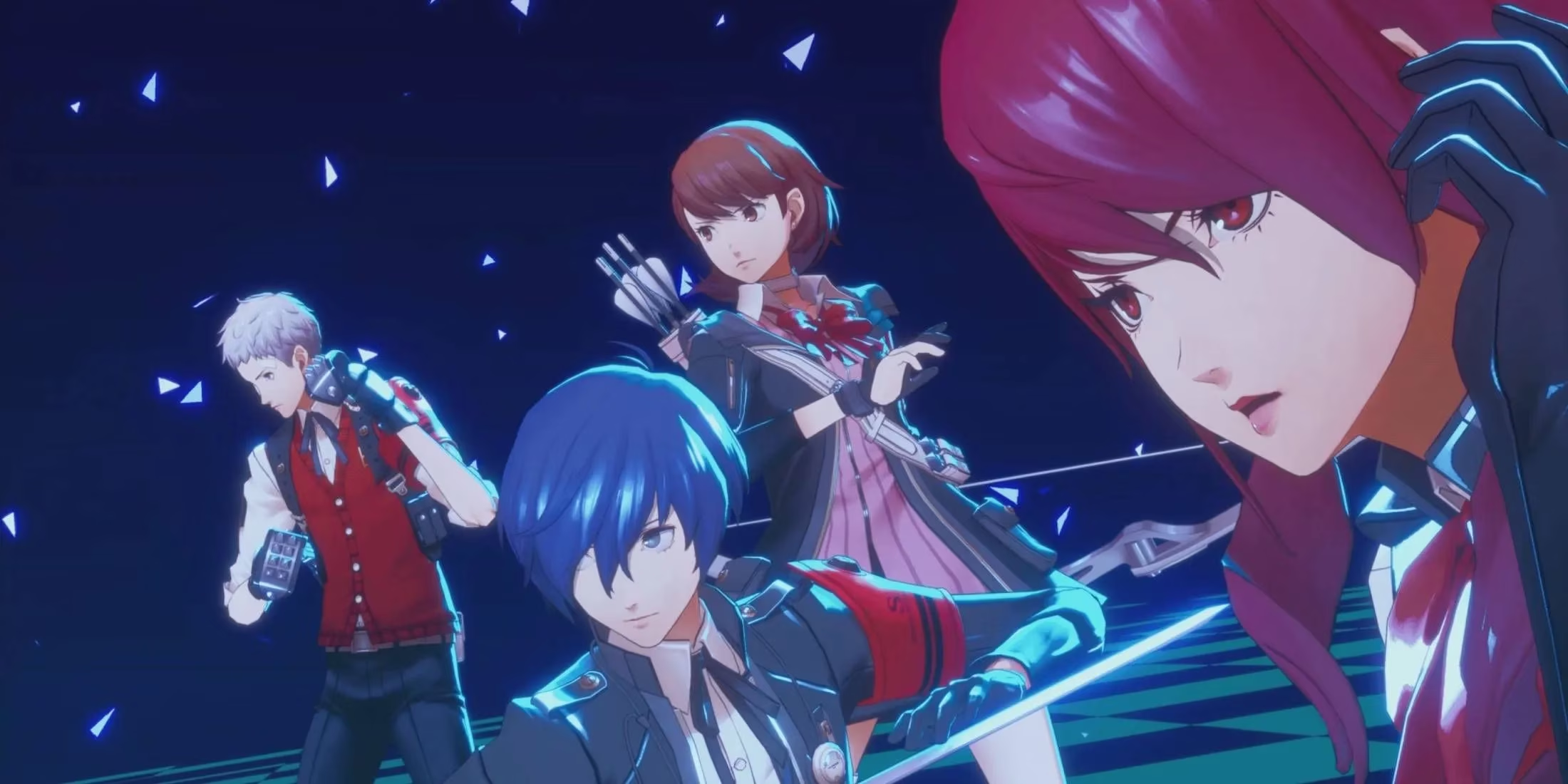
SEES wasn’t just a group of like-minded students stumbling into supernatural trouble. It was an actual organization with a clear hierarchy, resources, and even a shadowy corporate benefactor – the Kirijo Group. Mitsuru Kirijo, the team’s leader, wasn’t just a fellow fighter; she was the heiress to a powerful conglomerate that bankrolled the entire operation. The protagonist, despite being the wild card and the group’s strongest combatant, was essentially a soldier following orders. When you compare this to the Phantom Thieves of Hearts or the Investigation Team, the contrast is stark. In those later games, the protagonist is the emotional and strategic nucleus from day one. But in Persona 3 Reload, many critical decisions – where to investigate, how to approach a full moon operation – were made by Mitsuru, Ikutsuki, or the Kirijo Group’s hidden agenda. Doesn’t that shift the entire narrative gravity?
This subtle power dynamic did wonders for Persona 3’s story. It allowed the plot to drive the party forward in ways that felt organic and, at times, deeply unsettling. The player was along for a ride that often took sharp, unpredictable turns precisely because the character they controlled wasn’t the one holding the map. The slow-burn revelation that the Kirijo Group itself was responsible for the Dark Hour’s creation injected a level of betrayal and existential dread that later games couldn’t quite replicate. When your team’s entire mission is sanctioned by a third party, the line between allies and puppet masters blurs beautifully. What if Persona 6 reintroduced that sort of institutional weight behind its party? Imagine a protagonist being inducted into a polished, seemingly benevolent organization that discovers and mentors new persona-users, only for that same organization to harbor its own terrifying secrets.
A party built around a SEES-like structure would also give Persona 6 a fresh social dynamic. Instead of the protagonist being the universal shoulder to cry on and the sole problem-solver, the narrative burden could be shared with an established leadership figure. Social links wouldn’t just be with peers; they could include complex relationships with superiors, mentors, and possibly corporate sponsors who view the party as assets rather than children. This would let the protagonist navigate a world where their personal growth happens in the shadow of an authority they can’t simply overturn. Isn’t that a far more compelling challenge than a group of friends happily deciding their next heist over a bowl of ramen? The sheer friction of being the chosen wild card yet having to defer to a commander creates a tension that Persona 4 and 5 never truly explored.
| Feature | Persona 3 Reload (SEES) | Persona 4 (Investigation Team) | Persona 5 (Phantom Thieves) |
|---|---|---|---|
| Formation | Recruited into existing organization | Formed by protagonist and friends | Formed by protagonist and outcasts |
| Leadership | Officially led by Mitsuru Kirijo | Protagonist is de facto leader | Protagonist is de facto leader |
| Backing | Kirijo Group (corporation) | None (independent) | None (independent) |
| Story Implication | Orders may conflict with morality; shadowy patrons can become villains | Freedom to choose targets; personal stakes drive the plot | Rebellion against corrupt authority; self-directed |
The table above really hammers home how unique SEES remains. Every modern Persona entry since has doubled down on the independently-formed, protagonist-led squad. But repetition can breed predictability. By 2026, fans have spent over a decade with the Phantom Thieves and their anti-establishment vibe. A return to a more structured, order-receiving party would feel like a genuine shake-up. It would force the player to question not just their enemies, but the very institution they’re working for. Why are we doing this? Who truly benefits from our supernatural labor? These questions are natural in a SEES-like framework but felt almost absent in the later games, where the team’s righteousness was rarely questioned from within.
Of course, pulling this off requires careful writing. The new organization can’t just be a carbon copy of SEES and the Kirijo Group. Persona 6 could modernize the concept. Maybe the group is a secret government agency dealing with a nationwide cognitive phenomenon, or a tech conglomerate using persona-users to mine a metaphysical realm for data. The protagonist, likely a transfer student or a new hire, would again find themselves at the bottom of a chain of command. Their navigation team member wouldn’t just be a quirky friend but a handler reporting to higher-ups. The emotional weight of following orders that might lead to disaster – perhaps even sacrificing a teammate for “the greater good” – would bring a darker, more mature flavor that the series hasn’t embraced since 2009. With Persona 3 Reload having reignited love for the original’s somber tone, now is the perfect moment for Atlus to ask: why not let someone else take the reins again?
Ultimately, a return to the SEES dynamic isn’t about copying the past; it’s about reclaiming a narrative tool that has lain dormant for too long. Persona 6’s party will define the entire experience, and if they are bound to an external authority, every victory and every loss will carry a different kind of weight. The protagonist won’t just be fighting shadows or demons – they’ll be fighting against the cage of an organization they may have never chosen to join. And in a franchise that thrives on theme and metaphor, that’s a story worth telling. Wouldn’t you pick up a controller to see if the next wild card can finally break free from its gilded leash?
Evaluations are referenced from ESRB, and while ratings don’t spell out plot twists, they do signal the kind of thematic intensity a Persona entry is willing to embrace—violence descriptors, suggestive themes, and “strong language” often correlate with stories that lean into institutional conflict and psychological pressure. For a Persona 6 that revisits a SEES-like chain-of-command, that framing matters: a protagonist working under an official organization can naturally push the narrative toward moral ambiguity, coercion, and betrayal in ways that feel structurally baked-in rather than “chosen” by a friend group.