A Hopeful 2026: Why It's Time for Live Service Games to Evolve and Traditional Development to Return
Video game industry trends 2026 and live service model spark calls for creative change, urging a return to polished, artistic experiences.
The year 2026 stands poised on the precipice of potentially historic change within the video game industry. As the calendar turns, a palpable sense of yearning for a different creative era permeates the community. While the dominant live service model, with its relentless content churn and engagement-driven economics, continues to generate staggering revenue, a growing chorus of voices—players and critics alike—hopes for a shift. The wish for this coming year is not necessarily for the complete demise of these persistent online worlds, but for a fundamental re-evaluation. The desire is for the industry to rediscover the artistry and enduring satisfaction found in complete, polished, traditionally developed experiences, moving beyond a model that too often prioritizes perpetual monetization over lasting quality.

The hollowing effect of the live service paradigm is perhaps most starkly illustrated by the trajectory of the Call of Duty franchise. Once lauded for its groundbreaking, cinematic single-player narratives, the series has become a shell of its former self under the demands of a yearly, service-focused cycle. The announcement that Activision is moving away from its rigid annual release schedule for Black Ops and Modern Warfare sub-series is a glimmer of hope. It suggests a potential return to a development philosophy where time and care can be invested into crafting stellar shooters, rather than simply regurgitating familiar mechanics adorned with incongruous cosmetic items. Memories of the original Black Ops campaign, with its memorable characters and iconic lines like Reznov's "Spear the winged beast!" charge, highlight what has been lost: impactful, self-contained storytelling. While Modern Warfare 2019 offered a brief renaissance, the overarching focus has remained on retaining players through seasonal battle passes and operator skins, often at the expense of the core game's soul and stability.
This model's detrimental impact extends to other titans of the shooter genre. Battlefield 6, which launched to acclaim and restored much of the franchise's tarnished reputation post-2042, is now showing the cracks inherent in a mandated live service structure. The game's most recent update, which introduced widespread bugs and balance issues, stands as a testament to the pitfalls of rushed content pipelines. The old system of large, thematic DLC packs, while problematic for splitting the player base, allowed for more cohesive and thoroughly tested expansions. The new paradigm demands a constant, scheduled output of maps, events, gadgets, and modes. This relentless calendar turns quality assurance from a necessity into a luxury, with rigid deadlines trumping polish. Furthermore, the attempt to be everything to everyone—tacking on a battle royale mode in a saturated market—has diluted the game's unique identity and contributed to declining player engagement. For a franchise with Battlefield's storied legacy, being merely "fantastic" feels like a compromise born from systemic pressure, not creative ambition.
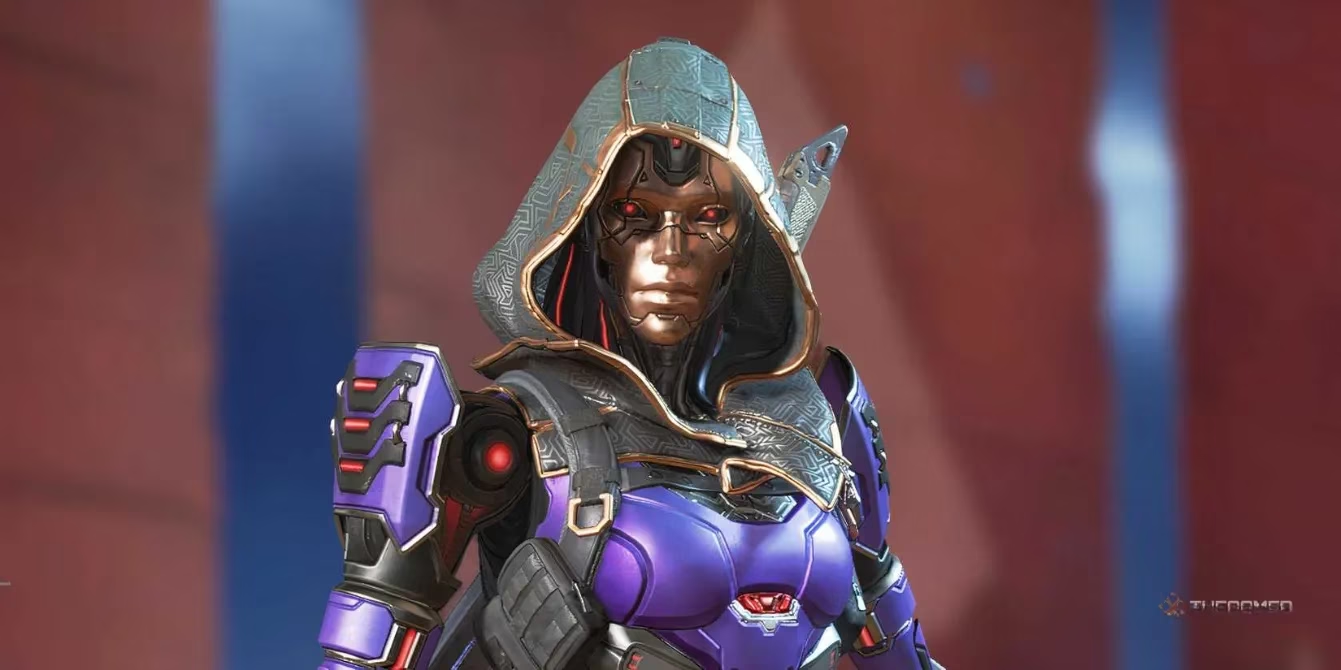
Even successful live service titles face the inherent fatigue of their own design. Apex Legends, Respawn Entertainment's brilliant battle royale, exemplifies this. Players who have invested thousands of hours can eventually find the endless grind for new cosmetics and the constant meta-shifts exhausting. The game's vitality is maintained through a perpetual churn of new Legends, map alterations, and weapon balances. While this keeps the experience dynamic for dedicated players, it creates a formidable barrier to re-entry. Returning after an extended hiatus leaves a player disoriented, overwhelmed by a slew of new mechanics and a transformed landscape. This stands in stark contrast to Respawn's own history, where within two years they delivered both Titanfall and its sequel, Titanfall 2—the latter widely celebrated as a masterpiece of single-player FPS design and innovative movement. That prolific, quality-focused era has been supplanted by the all-consuming task of servicing a single live product, arguably at the cost of new, groundbreaking intellectual property.
The core issues with the contemporary live service approach can be summarized as follows:
-
Relentless Content Pressure: Fixed seasonal schedules force studios to prioritize quantity and timeliness over quality and innovation.
-
Player Fatigue & Alienation: Constant change can exhaust core players and create insurmountable knowledge gaps for returning or new players.
-
Dilution of Identity: In attempts to capture broader audiences, franchises often sacrifice their unique core gameplay to adopt trendy modes or mechanics.
-
Stifled Innovation: Vast development resources are funneled into maintaining existing service games, reducing capacity for creating new, fully realized experiences.
| Traditional Model | Live Service Model |
|---|---|
| Focus on a complete, polished product at launch. | Focus on a foundational product with long-term content plans. |
| Expansions/DLC are substantial, less frequent. | Content updates are frequent, often smaller in scope. |
| Player knowledge base is relatively stable. | Meta and mechanics are in constant flux. |
| Development cycles conclude, teams move to new projects. | Development is perpetual on a single title. |
Looking ahead to 2026, the hope is not for a binary victory of one model over another, but for a synthesis of lessons learned. The industry can aspire to:
-
Embrace Flexible Development Cycles: As hinted at with Call of Duty, allowing franchises breathing room to innovate rather than adhere to a punishing annual schedule.
-
Prioritize Polish Over Pace: Building sustainable content pipelines where updates are ready when they are truly ready, not when a calendar demands them.
-
Reinvest in Narrative & Solo Experiences: Recognizing that a compelling campaign or a rich, offline world offers a type of value and artistic statement that live services rarely can.
-
Foster Innovation Between Services: Encouraging studios to allocate talent and resources to incubate new ideas between major seasonal updates for their flagship live games.
In essence, the wish for 2026 is for the industry to remember that player engagement is best earned not through psychological hooks and fear of missing out, but through genuine respect for the player's time and intelligence. It is a hope for a year where "incredible games" are defined by their creative vision and execution, not just their monthly active user count and revenue per user. The tools and connectivity that enabled the live service revolution are undeniable assets, but in 2026, perhaps developers can learn to wield them not just to maintain players, but to truly delight them again with experiences that feel crafted, not merely curated. 🎮✨