10 Video Games Where Protagonist Sacrifice Defines the Narrative
Game protagonist deaths create unforgettable, emotional moments, forging powerful player bonds and elevating narrative impact.
The bond between a player and their video game protagonist is unique, forged through shared struggles, victories, and countless hours of gameplay. It's a relationship built on control and investment. Yet, some of gaming's most powerful and memorable moments come from developers who dare to sever that connection in the most definitive way possible. While it might break a player's heart, the narrative choice to kill off the main character can elevate a story from mere entertainment to a poignant, unforgettable experience. These sacrifices, whether heroic, tragic, or redemptive, often become the emotional cornerstone of the entire journey, leaving a lasting impact long after the credits roll. From ghosts solving their own murders to outlaws seeking redemption in their final hours, these games prove that sometimes, a protagonist's end is their most powerful legacy.
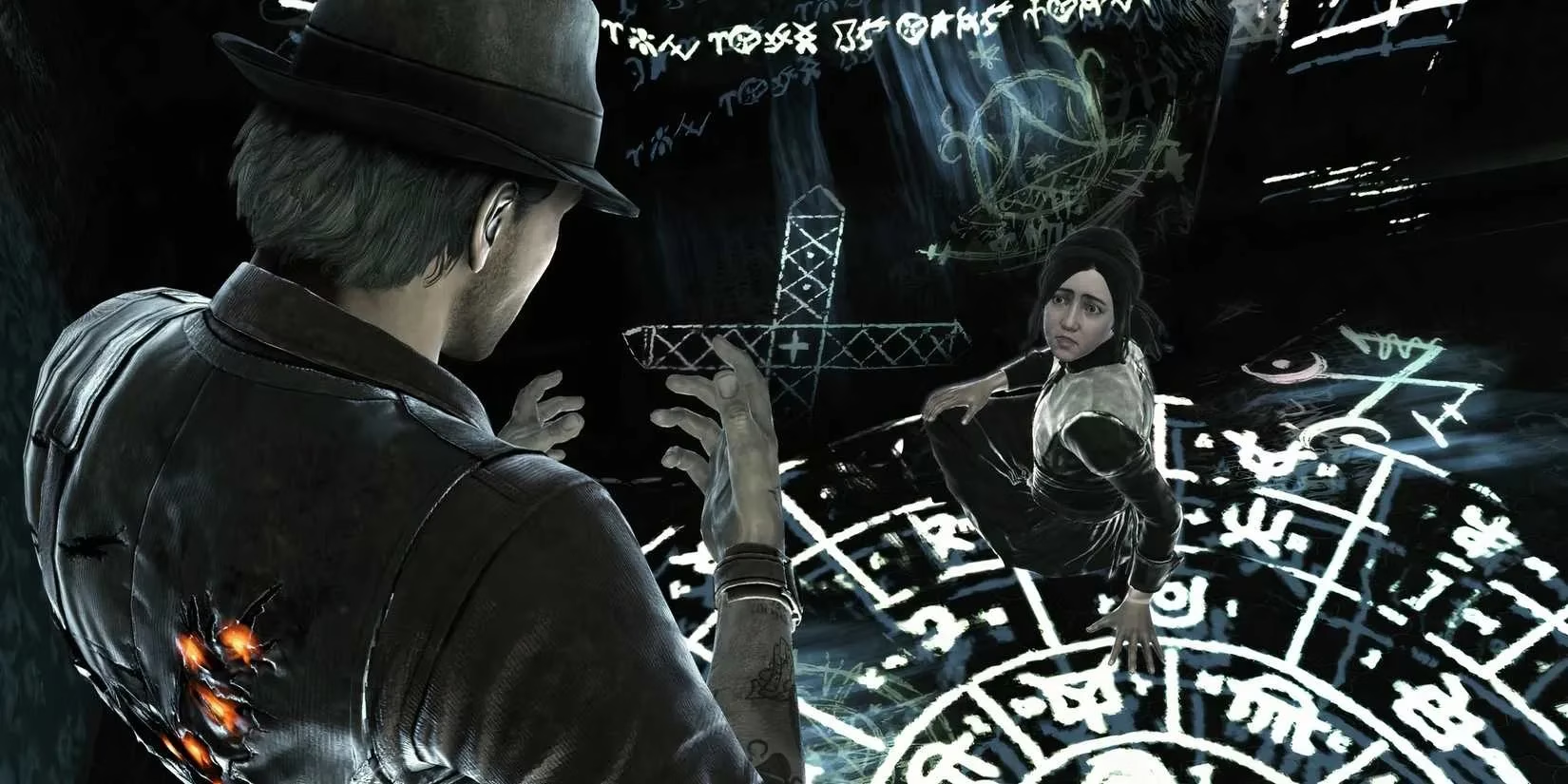
Kicking off this solemn list is a game that subverts the entire concept of player death. In Murdered: Soul Suspect, detective Ronan O'Connor is killed in the opening moments. The player doesn't just witness a protagonist's death; they inhabit its immediate aftermath. The core gameplay loop revolves around Ronan's ghost lingering in the earthly realm, compelled to solve the very mystery of his own murder to find peace. It's a fascinating premise—your avatar has already experienced the ultimate failure state, and the entire journey is a quest for closure from beyond the grave. The connection formed isn't with a living, breathing Ronan, but with his determined spirit, making his eventual resolution to move on a uniquely bittersweet victory.
The Assassin's Creed series once promised a grand, modern-day narrative woven through its historical tapestries, with Desmond Miles as its linchpin. Assassin's Creed 3 was meant to be his crescendo. After years of reliving his ancestors' memories to prevent a cataclysm, Desmond made the ultimate choice: to sacrifice his own life to save the world. For many, this moment felt less like a heroic culmination and more like a narrative dead end. Desmond was poised to be the unifying force giving meaning to the ancient Assassin-Templar war, a promise hinted at since the first game. His death, while sacrificial, ultimately served to reset the board for endless sequels, leaving players to wonder what a truly fulfilled arc for the series' original modern hero might have looked like.
FromSoftware's Sekiro: Shadows Die Twice is famously brutal, but one of its multiple endings delivers a narrative gut-punch that transcends mere gameplay difficulty. The Wolf's duty is to protect his young lord, Kuro, who is burdened with a cursed Dragon's Heritage. The standard path sees Sekiro performing the "Immortal Severance," a ritual that severs the immortality but requires Kuro's life. However, through specific, hidden actions, a different path opens: the "Return" ending. Here, Sekiro learns that for Kuro to live a normal life, all bearers of the Dragon's Heritage must die. Knowing he is the only other one, Sekiro makes a choice of supreme loyalty and duty. In a quiet, solemn act, he takes the Mortal Blade to his own neck, ending his life so that his master may have a future. It's a silent, powerful sacrifice that redefines the meaning of "winning" the game.
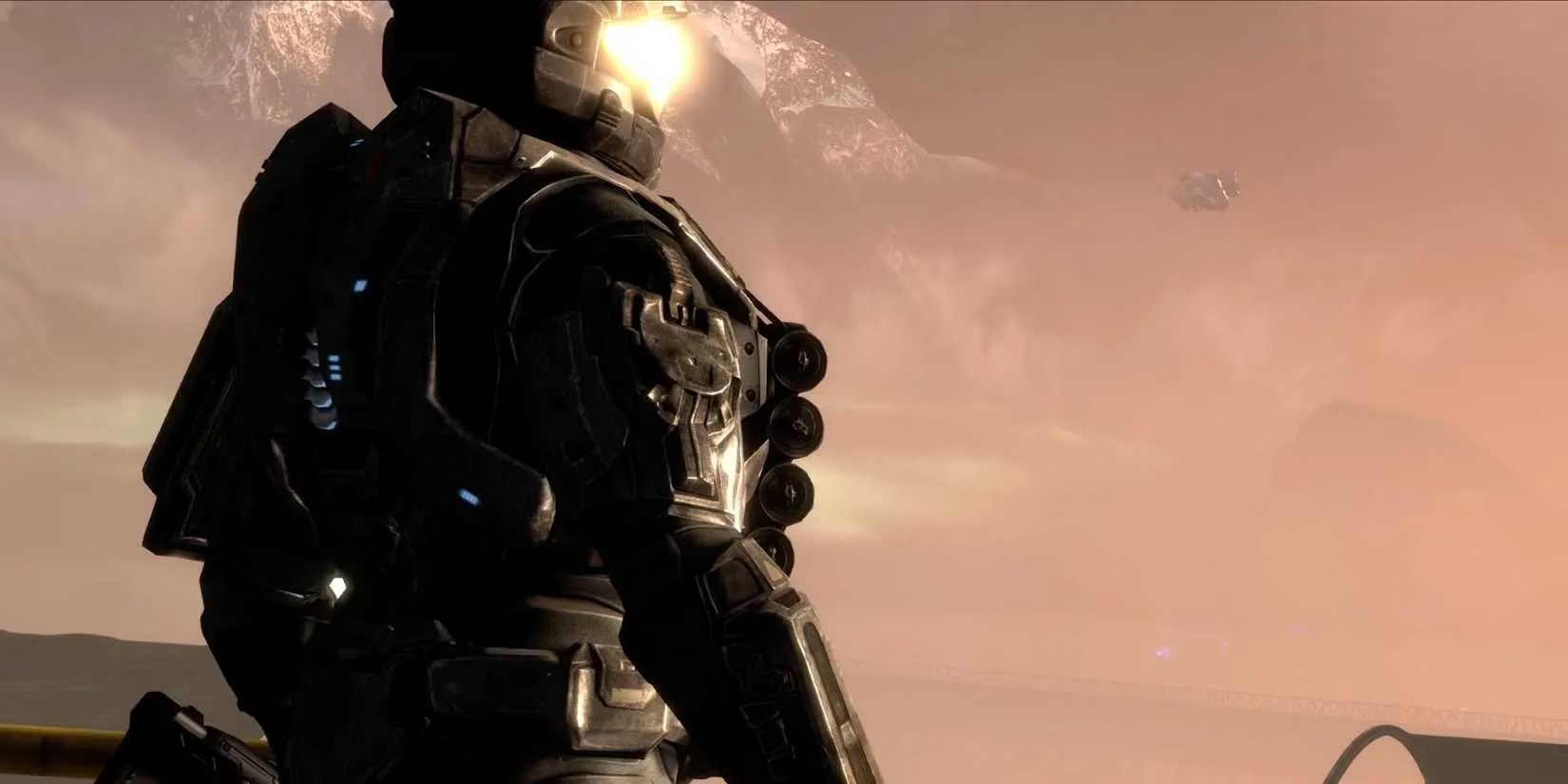
Halo Reach masterfully crafts a story where hope is measured in sacrifices. As the prequel to the original trilogy, players know the planet Reach will fall. You step into the boots of Noble Six, a Spartan whose team is systematically whittled down in a desperate, losing battle. The game's genius is making you care deeply about this doomed stand. The final mission, "Lone Wolf," strips away any pretense of victory. Noble Six's objective is no longer to win, but to buy time—to secure the escape of the Pillar of Autumn (carrying Cortana and the hope for humanity's future) by becoming the last line of defense. The player fights until they literally can fight no more, cementing Noble Six's death not as a failure, but as the essential first step toward Master Chief's eventual victory.
The melancholy beauty of Shadow of the Colossus lies in its simplicity and inevitable tragedy. Wander's quest is pure in motive: resurrect his beloved Mono. To do so, he strikes a deal with the mysterious entity Dormin and sets out to slay sixteen majestic colossi. With each kill, Wander is visibly corrupted, his body weakening and darkening. He knows the cost but presses on, driven by love. The climax is devastating. Upon felling the final giant, Wander is fully transformed. Lord Emon arrives, declaring Wander's actions a catastrophic mistake, and orders his warriors to execute him. In his final moments, Dormin possesses Wander's body, but Emon seals them both away. Wander dies on the altar, only to be reborn as an infant, found by a now-living Mono. His sacrifice was successful, but he paid the ultimate price, his old self completely erased in the process.
Commander Shepard's journey across the Mass Effect trilogy is a galactic epic of alliance-building, heartbreak, and unwavering resolve. By the climax of Mass Effect 3, the fate of every organic species hangs in the balance against the Reapers. In the game's original (and for many, definitive) ending, Shepard is presented with a final, brutal choice. To truly stop the cycle of annihilation, to give the galaxy a future, Shepard must make the ultimate sacrifice. Walking into the heart of the Crucible, Shepard's body is destroyed, their essence used to catalyze the destruction of the Reapers. It's a moment that resonates because of the incredible investment players have in Shepard's relationships, crew, and legacy. The sacrifice feels earned—a heroic, if somber, conclusion to one of gaming's greatest space operas.
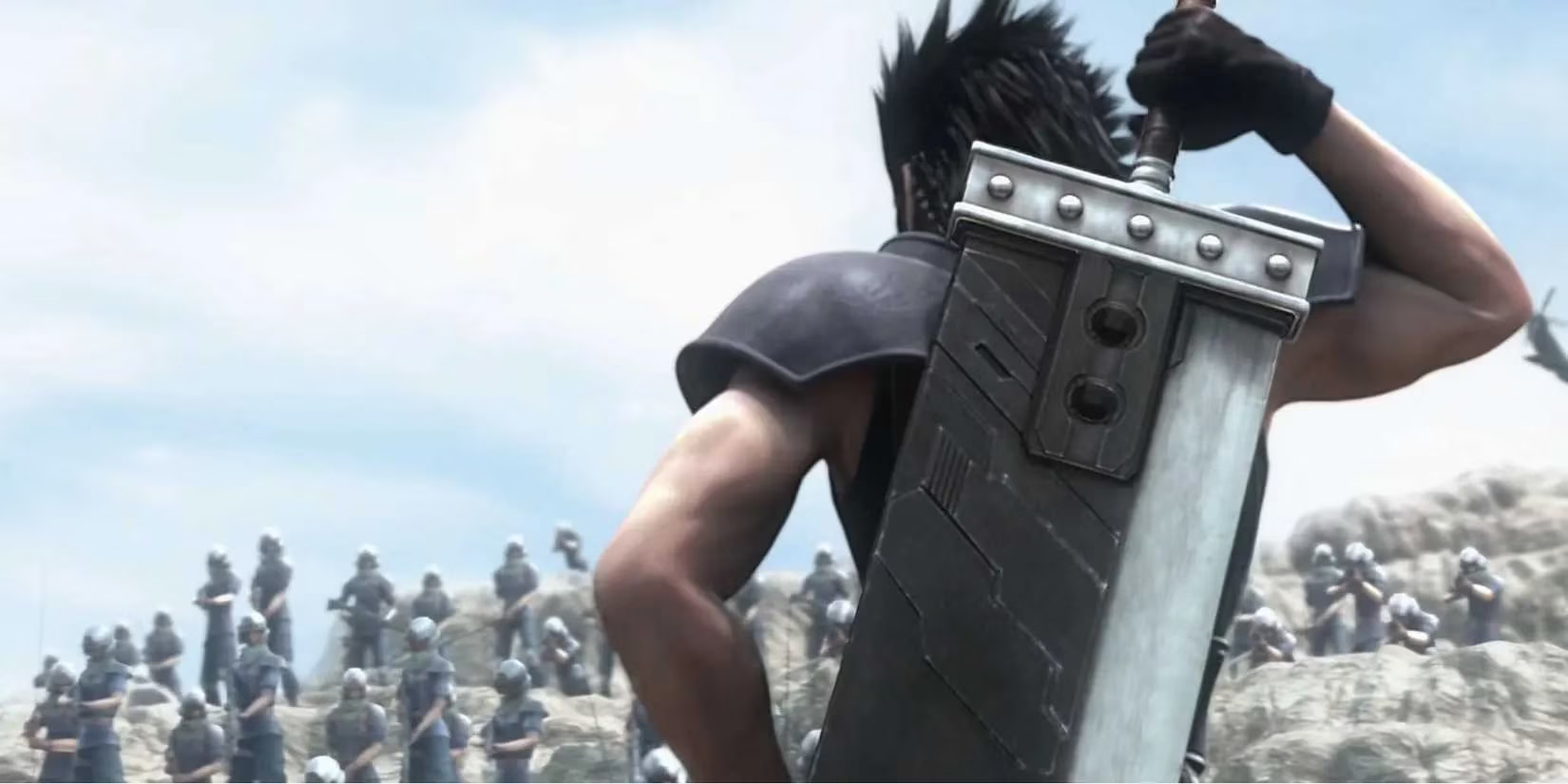
Crisis Core: Final Fantasy VII Reunion tells a story whose ending is known to fans, yet remains profoundly affecting. Zack Fair is the epitome of the heroic, optimistic SOLDIER. His bond with the mentally shattered Cloud Strife becomes the core of the narrative. Their desperate journey to reach Midgar ends in a rain-soaked ambush by Shinra troops. What follows is a legendary last stand. Zack, wounded and exhausted, single-handedly holds off wave after wave of soldiers to protect the incapacitated Cloud. The gameplay here forces you to fight an unwinnable battle, your health constantly depleting against endless reinforcements. Zack's final thoughts, his dreams of heroism and a future, are bequeathed to Cloud as he falls. This sacrifice doesn't just end Zack's story; it fundamentally creates Cloud's, making it one of the most foundational and heartbreaking deaths in RPG history.
Telltale's The Walking Dead: Season One crafted an emotional bond between player and character that few games have matched. Lee Everett, a convicted man given a second chance in the form of a little girl named Clementine, becomes a surrogate father. The entire season is about teaching Clem to survive, making tough choices to keep her safe. The finale is a masterclass in emotional storytelling. Bitten and dying, Lee storms a zombie horde to rescue a kidnapped Clementine. The final moments are quiet, intimate, and devastating. In a locked room, with death imminent, Lee—now trembling and pale—entrusts Clem with her own survival. He gives her the choice to leave him or end his suffering before he turns. The player, through Clem, must make that final, awful decision. Lee's death is not a grand spectacle; it's a personal, heartbreaking goodbye that cements the game's legacy.
Persona 3 Reload delivers an ending that lingers, a slow-burn tragedy wrapped in the warmth of friendship. The protagonist, Makoto Yuki, starts as a reserved transfer student but blossoms by forging "Social Links"—deep bonds with his classmates. These connections make life worth living, which makes the ending so poignant. To seal away the apocalyptic entity Nyx and save everyone, Makoto becomes the Great Seal. He doesn't die in a battle; he uses his life force to become a barrier, a sacrifice that leaves him in a fragile, fading state. The cruel twist? The world moves on, and memories of the supernatural threat fade. In the poignant epilogue, Makoto, growing weaker by the day, holds on just long enough to fulfill a promise to meet his friends on graduation day. As they finally remember him and rush to his side, he passes away peacefully, his mission complete, surrounded by the love he fought to protect. It's a sacrifice of quiet, enduring strength.
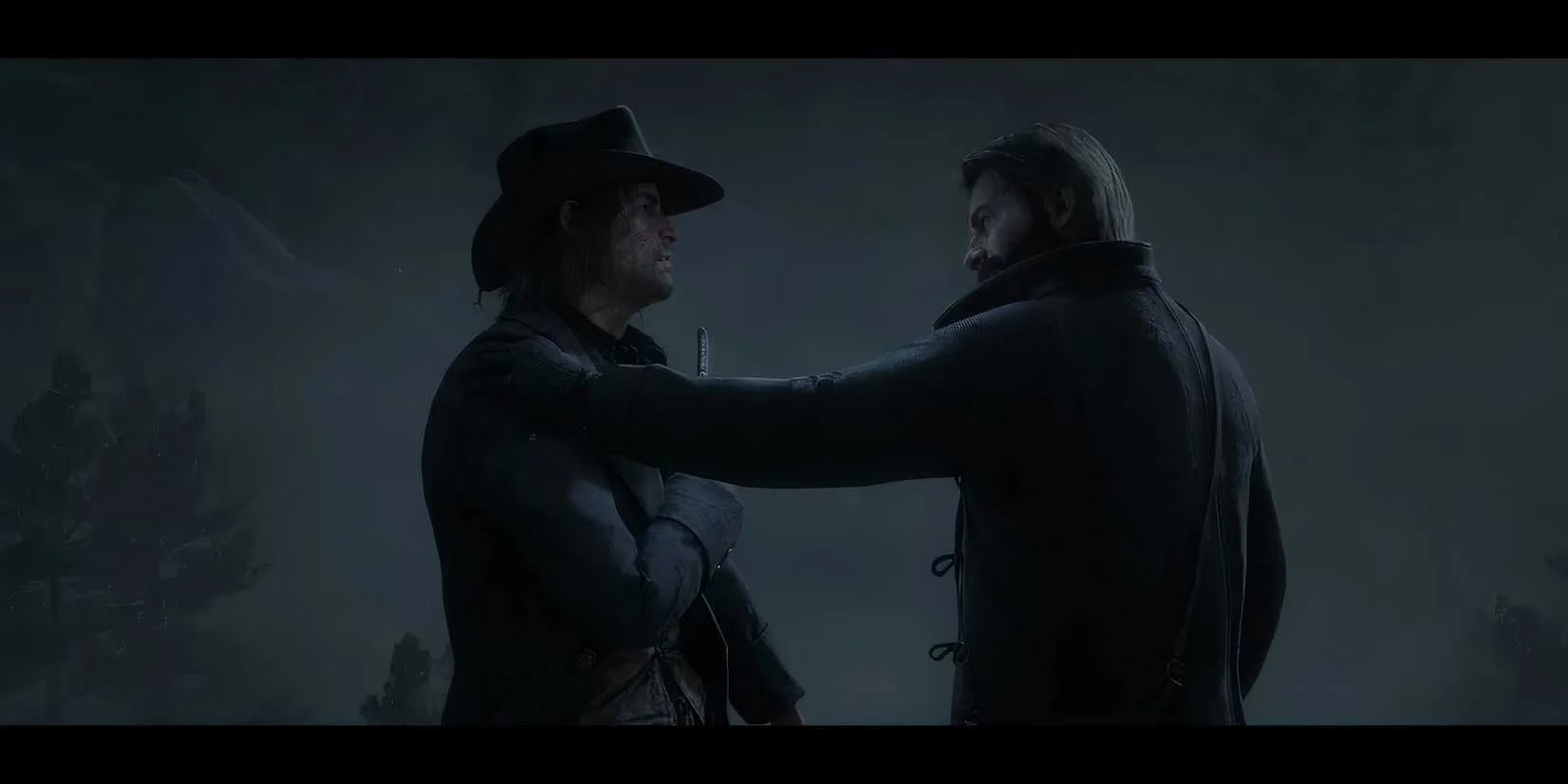
Topping this list is a masterwork of character development where the protagonist's death is not just an ending, but the entire point of the story. Red Dead Redemption 2 spends dozens of hours letting players live as Arthur Morgan, a rugged outlaw in a dying Wild West. His diagnosis with terminal tuberculosis halfway through the game acts as a narrative catalyst. It forces Arthur—and the player—to confront his mortality. From that point, every cough, every stumble, is a reminder. The genius of the narrative is how it adapts: Arthur can choose to spend his final days seeking redemption, helping others, and ensuring the safety of John Marston's family. His final act, whether on a mountaintop or in a knife fight, is dictated by the choices the player made in his twilight. Arthur Morgan's death is a powerfully earned conclusion, transforming him from a simple enforcer into one of gaming's most tragic, complex, and beloved heroes. His last, whispered admission, "I'm afraid,\" is a moment of profound vulnerability that completes his unforgettable journey.